Maybe you chose a campervan so you could watch the sun set over a quiet lake. But that peaceful moment can disappear if a ranger knocks early, the car park is crowded, or new restrictions appear. Freedom camping only works when everyone respects the land. In New Zealand, following the basics of responsible camping is more important than many people think.
Freedom camping is one of the best parts of a self-drive trip. It gives you flexibility, saves money, and lets you get closer to the places you want to see. But there are limits. Councils work to protect popular spots, locals notice the effects every day, and just a few careless campers can ruin it for everyone.
What it really means to use freedom camping responsibly
Responsible freedom camping is not just about finding a free place to sleep. It means choosing legal locations, being self-contained enough for the area, and leaving no trace that you were there. That includes rubbish, wastewater, toilet waste, noise, parking habits, and even how much space you take up.
This is where many visitors get caught out. A beautiful roadside reserve might look harmless, but if overnight parking is restricted, or if your van does not meet self-containment requirements for that location, you can still be fined. Good intentions do not override local bylaws.
The smart approach is to treat every stop as a shared space, not a private campsite. If your overnight stay makes the place dirtier, louder, more crowded, or less usable for others, it is not responsible freedom camping.
Know the rules before you pull over
New Zealand’s freedom camping rules vary across the country. Some areas welcome self-contained campervans. Others allow overnight stays only in designated bays. Some ban freedom camping altogether, especially where infrastructure is limited or local pressure is high. (Regulatory Impact Statement: Freedom Camping, n.d.)
That means there is no single national shortcut. You need to check the local council rules for your district, as well as any on-site signs. If the sign says no overnight camping, time limits apply, or self-contained vehicles only, take it seriously. Rangers do patrol popular areas, and fines are not rare. Before your trip, check reliable sources such as the official websites of each local council or use reputable apps like CamperMate or Rankers NZ, which provide up-to-date information on legal camping locations and restrictions. This helps you plan confidently and avoid costly mistakes.
It also helps to understand what self-contained actually means in practical terms. It is not just a sticker on a window. A self-contained vehicle typically has a toilet, fresh water storage, wastewater (greywater) tanks, and a system for storing toilet waste, all securely fitted and sealed. This setup allows you to manage all your water and sanitation needs without relying on local facilities or the surrounding environment. If you are hiring a campervan, ask exactly what the setup includes—such as whether it has a fixed toilet, how much water it can store, and how to safely empty the waste tanks—and where it is suitable to stay.
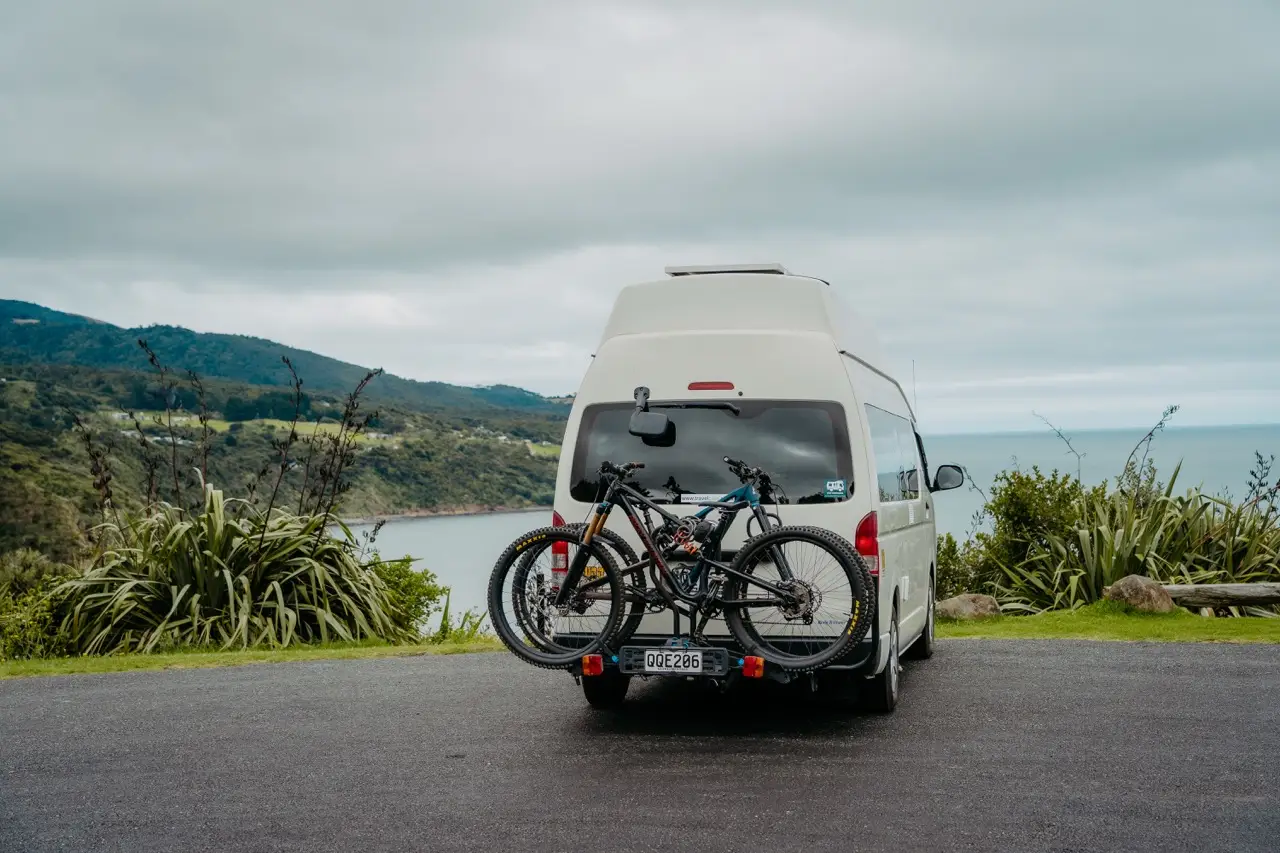
A smaller van can be a real advantage here. It is easier to park neatly, turn around in tight spaces, and avoid blocking access or annoying other road users. That matters in busy coastal towns and small scenic reserves where space is limited.
Choose places that can handle overnight stays
Not every scenic layby is a good camping spot. A responsible traveller looks for places that are already intended, or at least suitable, for overnight use. That usually means a designated freedom camping area, a legal parking zone with clear allowances, or a site where your presence is unlikely to create pressure on toilets, bins, or neighbours.
If a location is packed or the ground is wet and fragile, move on. If houses are right beside the reserve and your van will be the only one there, think twice. Just because you can fit into a spot does not mean you should stay in it.
Popular places often have a simple rhythm. Arrive too late, and you end up parking badly. Leave too late, and you hold up day users. A better habit is to arrive with enough daylight to assess the area properly, park tidily, and make a backup plan if it does not feel right. For example, if your first choice is full or unsuitable, know the location of the nearest paid campground, DOC site, or another designated area where you can stay instead. Using apps like CamperMate or Rankers NZ lets you check up-to-date site availability or quickly find alternative legal spots. Having these backup options ready will help you avoid stress and prevent pressure on crowded or inappropriate sites.
Waste is the issue that ruins it for everyone.
If there is one reason freedom camping becomes controversial, it is waste. The rubbish left behind is obvious, but greywater and toilet waste do far more damage. According to the Freedom Camping Act 2011, it is an offence to leave waste anywhere except in an appropriate waste receptacle, so always carry your rubbish until you can dispose of it properly. Do not leave bags beside a full bin. Do not assume someone else will deal with food scraps. If you are travelling for days at a time, it is worth keeping rubbish organised in sealed bags or containers so the van stays clean and local wildlife is not attracted.
Wastewater needs the same discipline. Never empty sink water onto the ground unless you are at an approved dump point or disposal area designed for it. Even biodegradable products are not an excuse to pour wastewater into a reserve, beside a lake, or near a stormwater drain.
Toilet waste is non-negotiable. Use the toilet correctly, empty it only at approved dump stations, and do not leave that job until the last possible moment. Responsible travellers plan ahead, especially before heading into remote stretches where facilities are limited.
Respect the people who actually live there
Freedom camping can feel wonderfully remote even when you are only a few minutes from town. For locals, though, these places are not temporary stopovers. They are beaches where kids swim, reserves where people walk the dog, and roads they use every day.
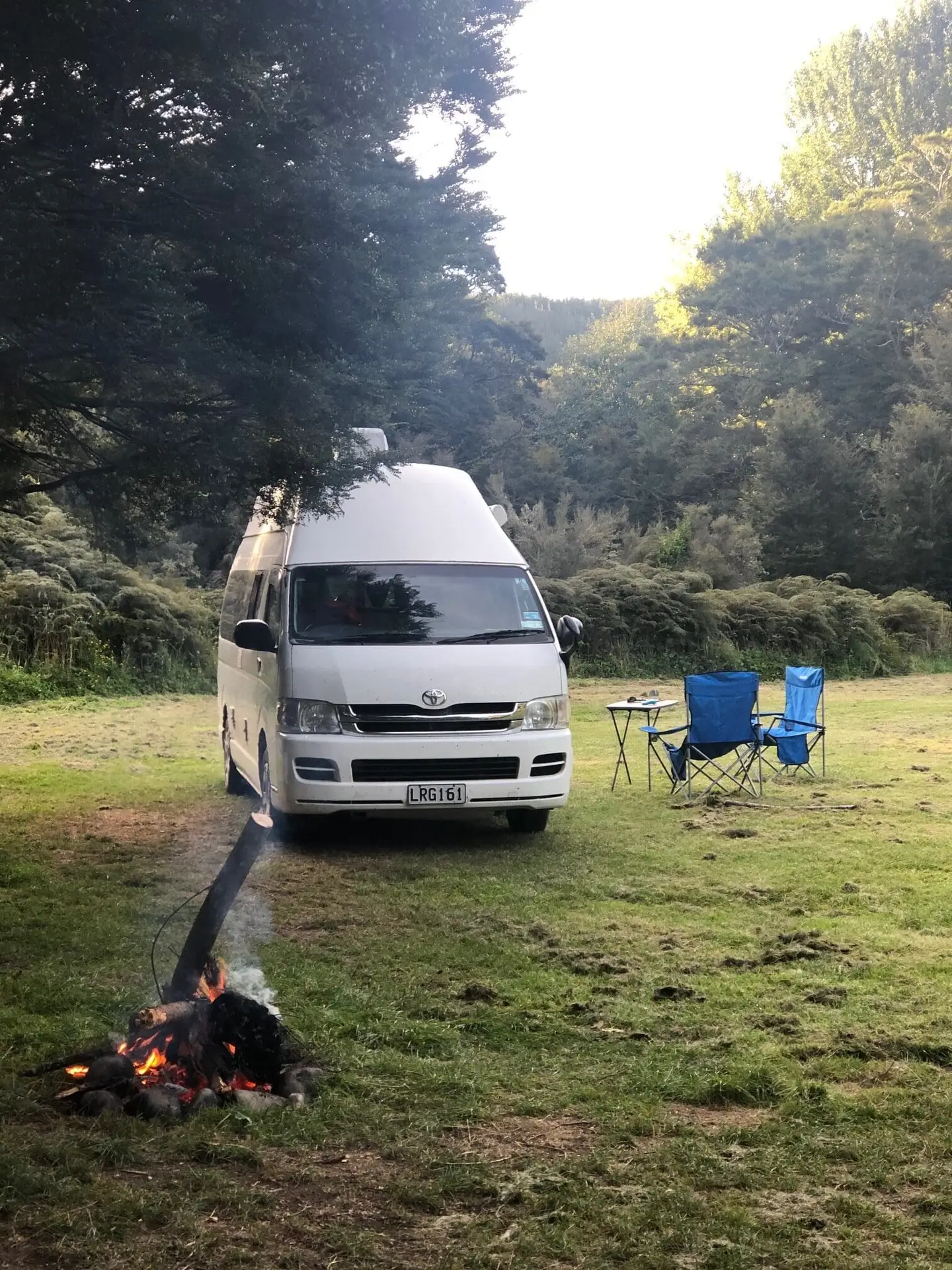
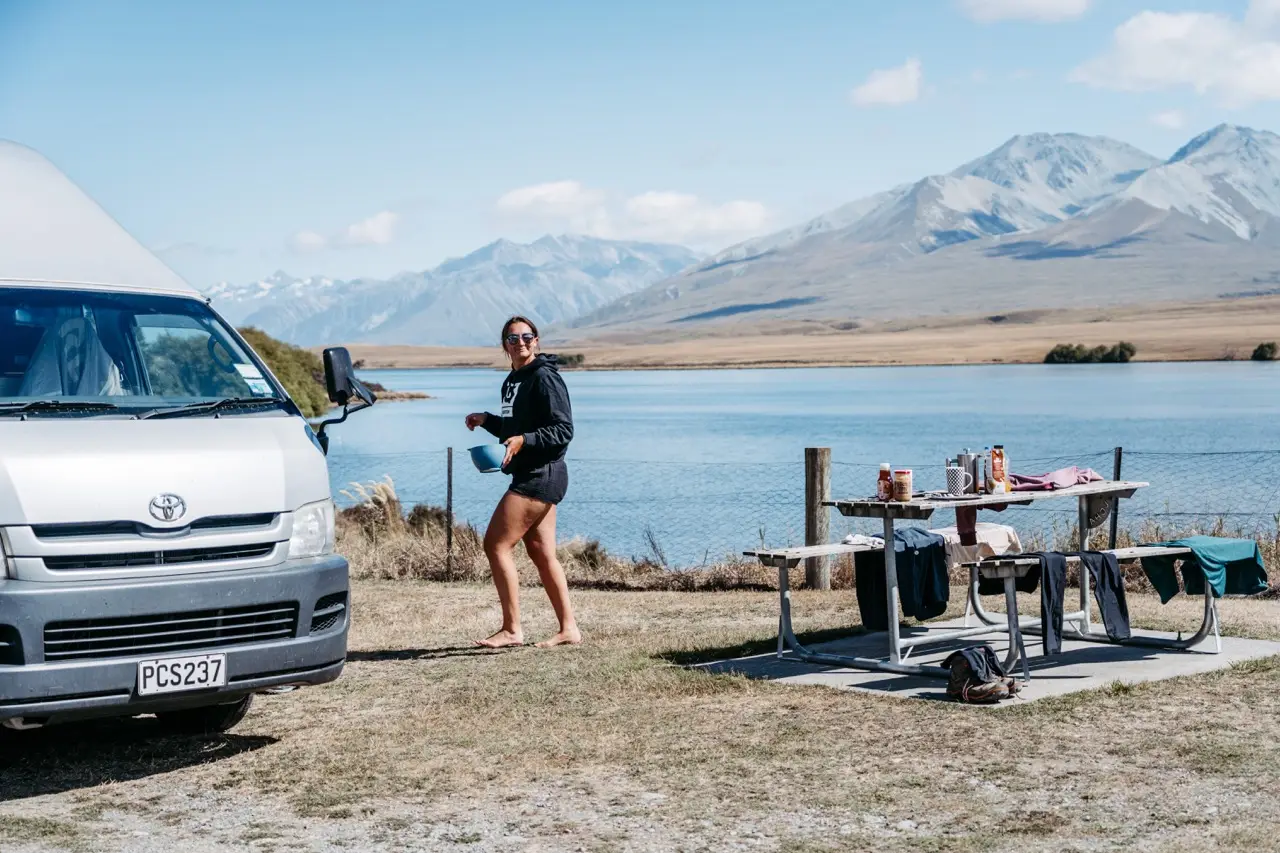
That is why noise matters more than visitors often realise. Keep doors and music quiet, especially early in the morning and after dark. Avoid setting up as if you are in a holiday park. Chairs out for a sunset drink might be fine where allowed and when space permits, but spreading gear across a car park or blocking shared areas quickly changes the mood.
The same goes for toilets and public facilities. If a small reserve has one public loo, use it considerately. If it is obvious the site cannot support a large number of overnight visitors, that is your cue to stay somewhere else.
A good rule is simple: if your overnight stop would frustrate you as a local, it is probably the wrong place or the wrong behaviour.
Drive and park with a bit of care
Freedom camping is not just about what happens once the engine is off. The way you arrive matters too. Many of New Zealand’s best stops are reached via narrow roads, gravel access points, or crowded town edges, where oversized vehicles can quickly create stress. (Background to freedom camping in Aotearoa New Zealand, 2024)
Park fully within the marked areas where possible, and never block gates, tracks, boat ramps, footpaths, or turning space. Keep clear of emergency access and give other vehicles room to move. If you need to reverse multiple times or mount the edge of a reserve to fit in, the spot is probably not suitable.
This is one reason many travellers prefer a compact campervan over a larger motorhome. You can explore more confidently without taking over every car park you enter. It is easier on you, and easier on the places you visit.
Be flexible when conditions change
Weather, roadworks, local events, and seasonal demand can all affect where it makes sense to stay. A legal site in summer might be overcrowded by evening. A peaceful lakeside area can become exposed and miserable in high wind. Sometimes, the most responsible decision is to pay for a campground rather than resorting to a poor freedom-camping option.
This is just good judgment and not a failure.
Experienced road travellers know that a simple backup plan saves a lot of stress. Keep enough charge, water and fuel to change course if needed. If you are travelling in a hired van, get familiar with how the power system, heating, fridge and water setup work before you rely on a remote overnight stop. Small practical details make a big difference after dark.
Why responsible freedom camping protects your own trip
There is a wider environmental reason to do the right thing, but there is also a personal one. Trips run better when you stay in legally permitted places, keep the van clean, and avoid rushed decisions. By following New Zealand’s freedom camping rules, you can avoid fines, sleep more peacefully, and spend less time dealing with preventable issues, especially if you are not familiar with local roads and regulations, according to the New Zealand government. A well-maintained, properly equipped campervan helps, but responsible travel habits matter just as much. At BANZ Travelcars, we have seen how much smoother a road trip feels when travellers understand the practical side of freedom camping from the start, not halfway through the holiday.
The best freedom camping spots in New Zealand still feel special because many people do get it right. They arrive prepared, stay lightly, and move on without leaving a mark. If you travel with that mindset, you will not just protect those places for the next traveller – you will enjoy them more yourself.