If you have ever stood in an airport car park staring at a campervan and wondering whether it will feel like freedom or compromise, this Toyota Hiace camper conversion review is for you. On paper, a Hiace can look simple beside larger motorhomes. On the road, and over a week or two of real travel, that simplicity is often exactly the point.
For couples and solo travellers exploring New Zealand, the Hiace has earned its place for good reason. It is compact enough to handle city traffic, winding coastal roads and supermarket car parks without drama. Yet it is large enough to provide the essentials for comfortable independent travel. The real question is not whether a Toyota Hiace can be converted into a campervan. Instead, it is whether the conversion has been done in a way that genuinely supports life on the road.
What makes a Toyota Hiace camper conversion work
A good conversion is not about squeezing in the longest feature list. Instead, it is about balance. You need a layout that is easy to live with. There should be enough storage for two people, reliable power and proper ventilation. The bed must feel realistic after a long day of driving or walking tracks.
That is why the Hiace remains such a practical base vehicle. Toyota built its reputation on reliability, and that matters even more when you are travelling between small towns or staying in remote scenic areas. Moreover, parts availability, mechanical familiarity and proven durability all help reduce the kind of stress nobody wants on holiday.
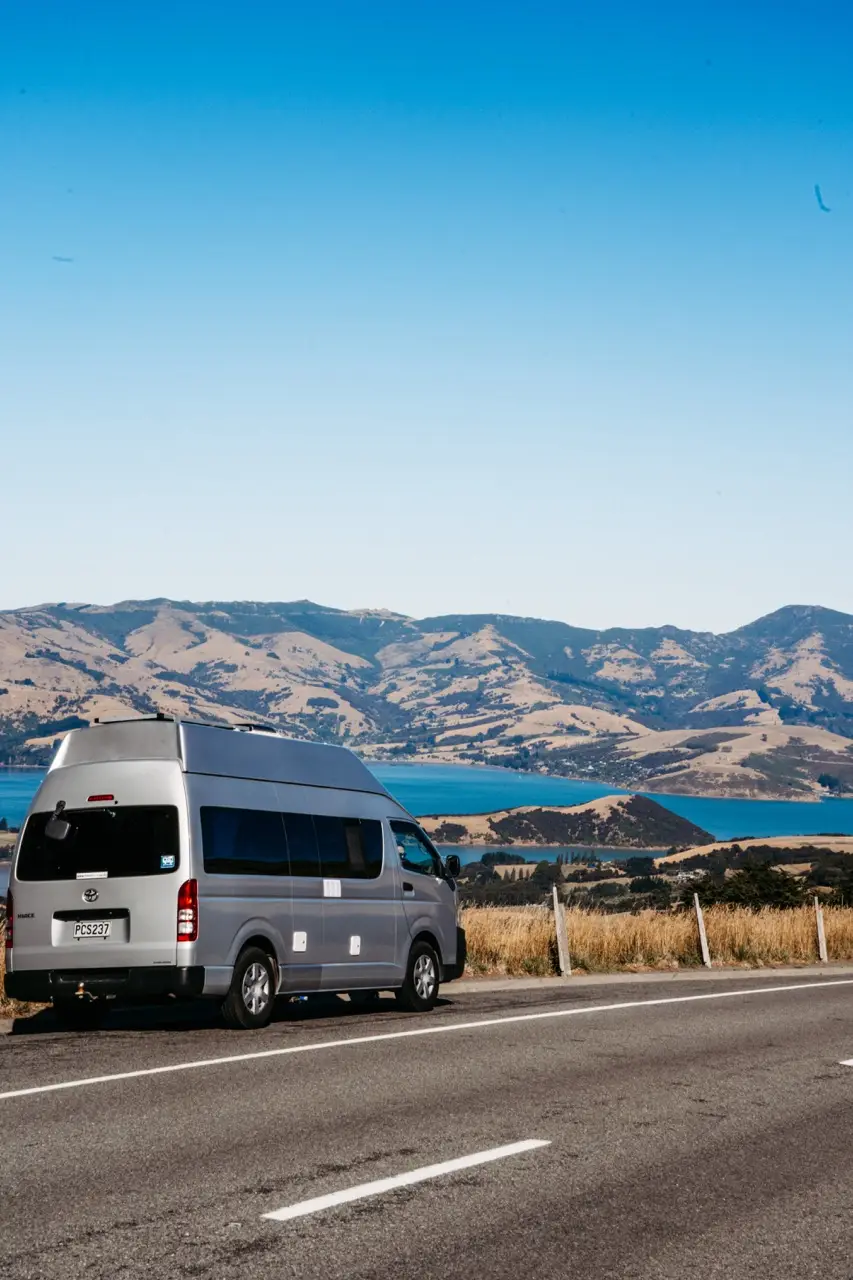
The shape of the Hiace also suits camper conversion better than many people expect. It gives enough interior length for a comfortable sleeping setup, but it does not feel oversized on narrow roads. In New Zealand, especially, where conditions can change from motorway to gravel turnout to mountain pass in a single day, drivability matters as much as interior fittings.
Toyota Hiace camper conversion review – the real strengths
The biggest strength of a Hiace conversion is ease. It is easy to drive, easy to park and easy to get used to if you have never hired a campervan before. That lowers the barrier for independent travel. This is particularly true for overseas visitors adjusting to local roads.
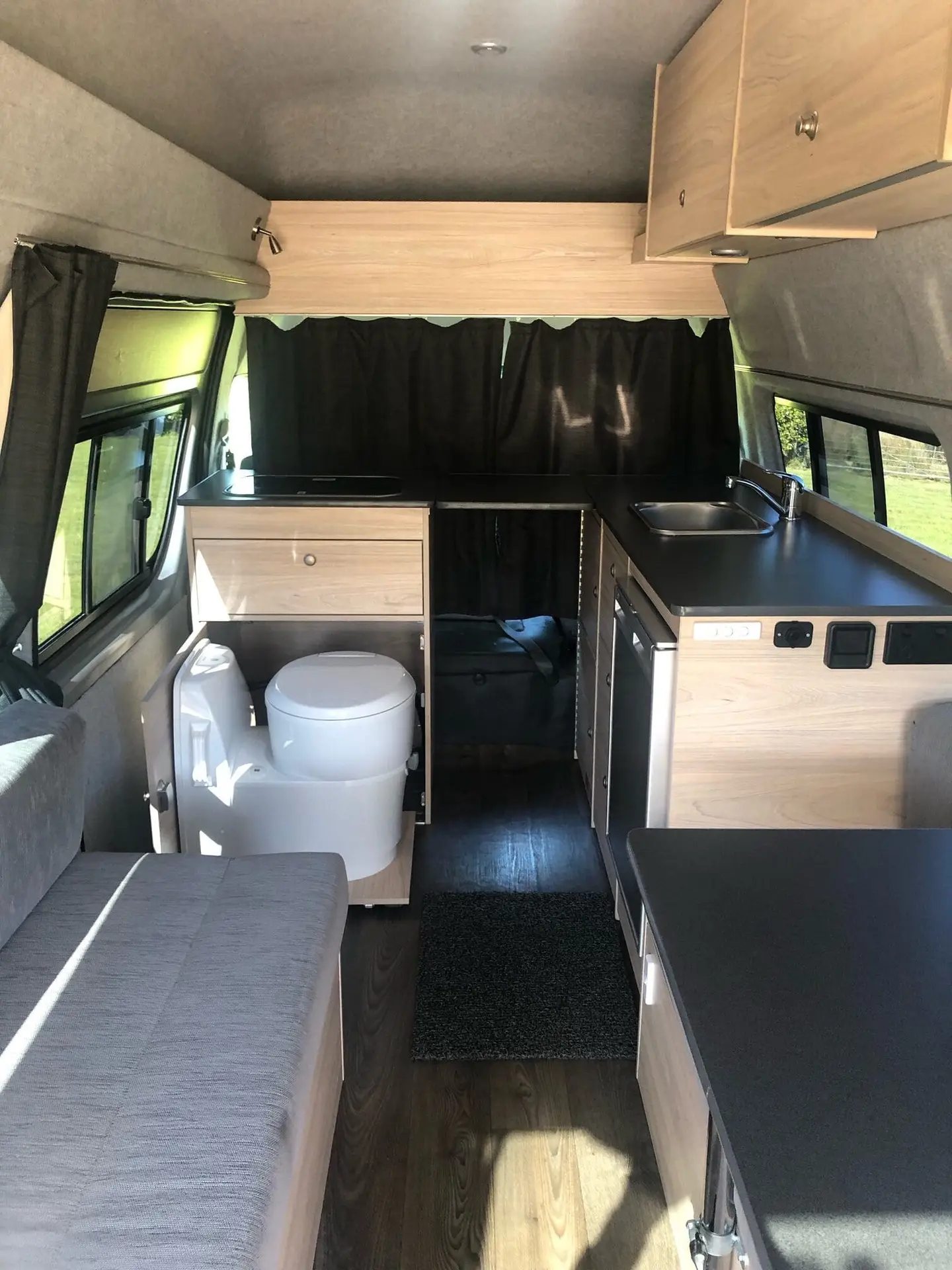
Inside, the best conversions make smart use of a modest footprint. A walkthrough layout is especially valuable because it lets you move from the cab to the living area without stepping outside in bad weather. That sounds like a small detail. However, it matters until you are parked up in the wind and rain trying to make a late dinner.
Another strength is efficiency. Hiace campers generally use less fuel than larger motorhomes, and they are often more affordable to hire. For travellers who would rather spend their budget on extra days on the road, activities or better campsites, that matters.
There is also a practical comfort to a well-finished, smaller van. Everything is within reach. Cooking, storage, charging devices and setting up the bed become part of an easy routine rather than a daily chore. For two people travelling together, that rhythm can make a trip feel far more relaxed.
Where some Hiace conversions fall short
Not every conversion gets the basics right. This is where a proper review needs to be honest.
The first weak point in some vans is the bed design. A bed can look fine in photos but feel too short, too narrow or too fiddly to set up every night. If the seat-to-bed conversion is awkward, you will notice it quickly. Comfort after dark affects the whole trip.
Storage is another common compromise. Some layouts leave room for kitchen equipment but not enough for clothes, food and bags for two adults. If travellers end up moving luggage around every day to use the table or access the fridge, the van starts to feel cramped fast.
Power systems can also separate an average conversion from a very good one. A camper with a weak auxiliary battery, limited charging options or no solar support can be frustrating if you are freedom camping or staying away from powered sites. The same goes for heating. In New Zealand, shoulder season nights can turn cold even after a sunny day. Therefore, a van without effective heating may not suit everyone.
Finally, cleanliness and maintenance should never be treated as extras. A smart layout means little if cupboard latches rattle, curtains do not close properly or appliances feel tired. In a compact campervan, every detail is more noticeable.
Comfort for two – realistic, not oversized
For a couple, a Hiace camper sits in a sweet spot. It is not as spacious as a large motorhome, and it is better to be upfront about that. You are choosing practicality and flexibility over full apartment-style roominess.
That trade-off often works in your favour. A compact two-person camper tends to feel more connected to the trip itself. You can pull into a beachside reserve and make lunch without fuss. You can keep moving afterwards. You can explore towns without worrying about every corner or parking space. If your travel style is active and mobile, the smaller size feels less like a sacrifice. It feels more like freedom.
The conversion matters here more than the vehicle badge alone. Good insulation, a proper fridge, thoughtful bench space, interior lighting and ventilation can make a smaller van feel easy to live in. On the other hand, poor planning can make even a larger vehicle feel awkward. That is why travellers should look beyond brochure language. It is important to focus on how the van functions hour by hour.
Drivability matters more than many first-timers expect
One of the best things about a Toyota Hiace conversion is the confidence it gives you behind the wheel. That matters for first-time campervan renters. However, it also matters for experienced road trippers who do not want the bulk of a large motorhome.
New Zealand rewards travellers who can stay flexible. You might head into a city for supplies in the morning, stop at a lookout for lunch and finish the day on a quieter rural route. A Hiace handles that kind of variety well. It feels much closer to driving a standard van than piloting a large house on wheels.
That ease can shape the trip in subtle ways. You may be more willing to take scenic detours, visit smaller attractions or stop in town centres where parking is tighter. A campervan that feels manageable tends to get used more freely, and that usually leads to a better travel experience.
What to look for in a rental conversion
If you are comparing options, look closely at the practical setup rather than just the nightly rate. A proper two-person camper should have a reliable dual-battery system, sensible storage and a usable fridge. Also, it should have privacy curtains, good ventilation, and a straightforward bed layout. Solar is a significant advantage for travellers planning to freedom camp. Heating is worth having if you are travelling outside the warmest summer period.
It is also worth asking how the vehicles are maintained and who supports you if something goes wrong. With campervan travel, service matters nearly as much as specifications. A personal handover, clear instructions and responsive support can make a huge difference. This is especially true when you are new to the country.
This is where family-run operators often stand out. At BANZ Travelcars, for example, the focus is not on handing over keys as quickly as possible. It is about making sure travellers understand the vehicle and feel comfortable using it. They should also be able to get real help during the trip if needed. That sort of support is easy to underestimate before arrival and very easy to appreciate once you are on the road.
Is a Toyota Hiace camper conversion right for your trip?
If you want maximum interior space, a full shower and the feeling of a larger motorhome, a Hiace may feel too compact. There is no point pretending otherwise. But if your priorities are affordability, reliability, easier driving and a practical home base for exploring, it makes a lot of sense.
For solo travellers, it can feel generous. For couples, it is usually comfortable when the conversion is well planned. For travellers who want to keep moving and stay flexible, it is often one of the smartest choices available. You can avoid paying for space you do not really need.
The best way to think about a Toyota Hiace camper is not as a scaled-down motorhome. It is its own style of travel – simple, capable and well-suited to people who want more of New Zealand and less of the fuss. Choose a well-maintained conversion with the right features, and the van tends to fade into the background in the best possible way. What stays with you is the trip itself.