The wrong campervan can make New Zealand feel smaller than it should. When two people are sharing the same space for days or weeks, little things matter fast – how easy it is to move inside, whether the bed setup becomes a nightly chore, and if the van feels practical on narrow roads and in town parking.
That is why choosing the right campervan for couples’ New Zealand trips is less about flashy extras and more about fit. For most couples, the sweet spot is a compact, well-equipped van that is easy to drive, comfortable to live in, and capable of supporting real road travel without blowing the budget.
What couples actually need from a campervan
Many first-time renters assume bigger is better. On paper, a larger motorhome sounds more comfortable. In practice, many couples find that a smaller campervan feels easier, cheaper, and less stressful for the kind of travel New Zealand does best.
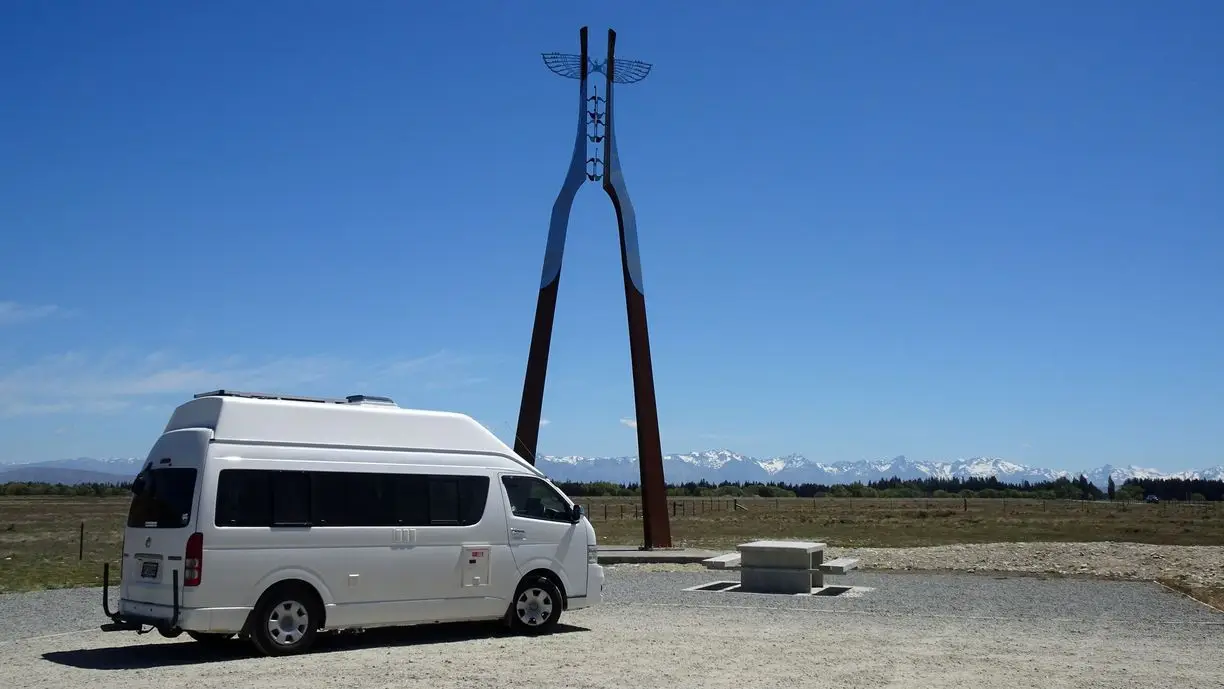
You are likely covering long distances, stopping often, parking in scenic spots, stocking up at supermarkets, and moving between cities, coastal roads, and mountain regions. A compact campervan suits that rhythm. By compact, most rental companies mean a van around 4.9 to 5.4 meters long, such as a Toyota Hiace or similar model, designed for two people. This size is noticeably smaller than traditional motorhomes, allowing you to navigate winding roads, park in regular spaces, handle narrower routes with ease, and usually use less fuel. That matters when your trip is about freedom rather than managing a large vehicle.
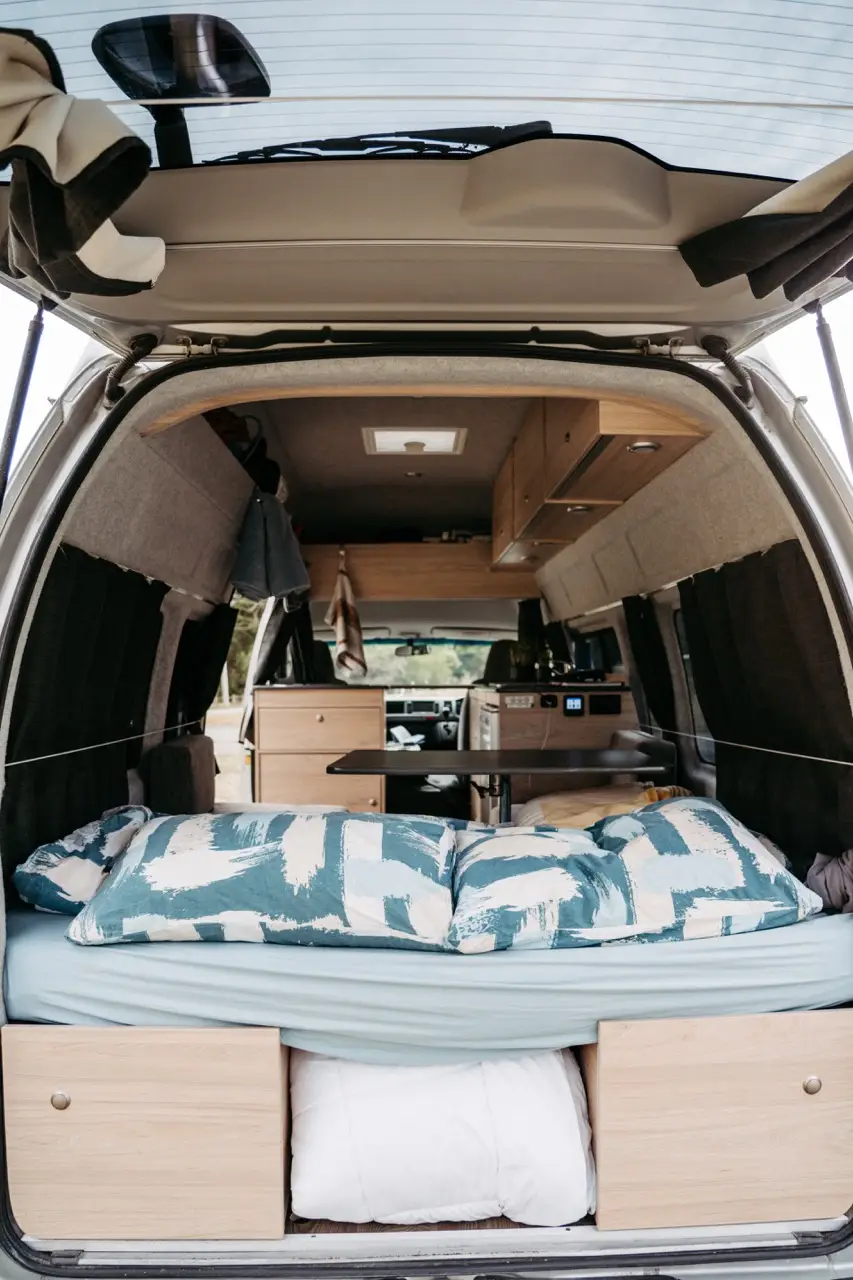
At the same time, compact should not mean cramped. For two people, the essentials are pretty clear: a proper bed, enough room to sit and eat inside, reliable storage, practical cooking facilities, and power systems that support life on the road. If those basics are done well, you often do not need much more.
The best campervan for couples in New Zealand is usually compact
For most travellers, a Toyota Hiace-sized campervan strikes a nice balance. It gives you enough living space for two without the awkward size of a motorhome. That matters in New Zealand, where roads can narrow quickly, and the weather can change your plans in an afternoon.
A compact van also makes everyday travel feel more flexible. You can pull into beaches, trailheads, small-town parking areas, and roadside lookouts without turning every stop into a maneuvering exercise. If you plan to mix classic destinations with less scripted travel, that flexibility is worth a lot.
There is a trade-off, of course. You will not get the spacious lounge area or separate bathroom of a larger RV. But many couples are happy to give that up in exchange for easier driving, lower rental costs, and the ability to keep moving comfortably. If you already know you want long, slow stays in one place, a larger vehicle may still suit you better. If your trip is built around exploration, compact often wins.
Features that make the biggest difference on the road
Some features sound nice in a brochure but barely affect the trip. Others shape your day from morning to night.
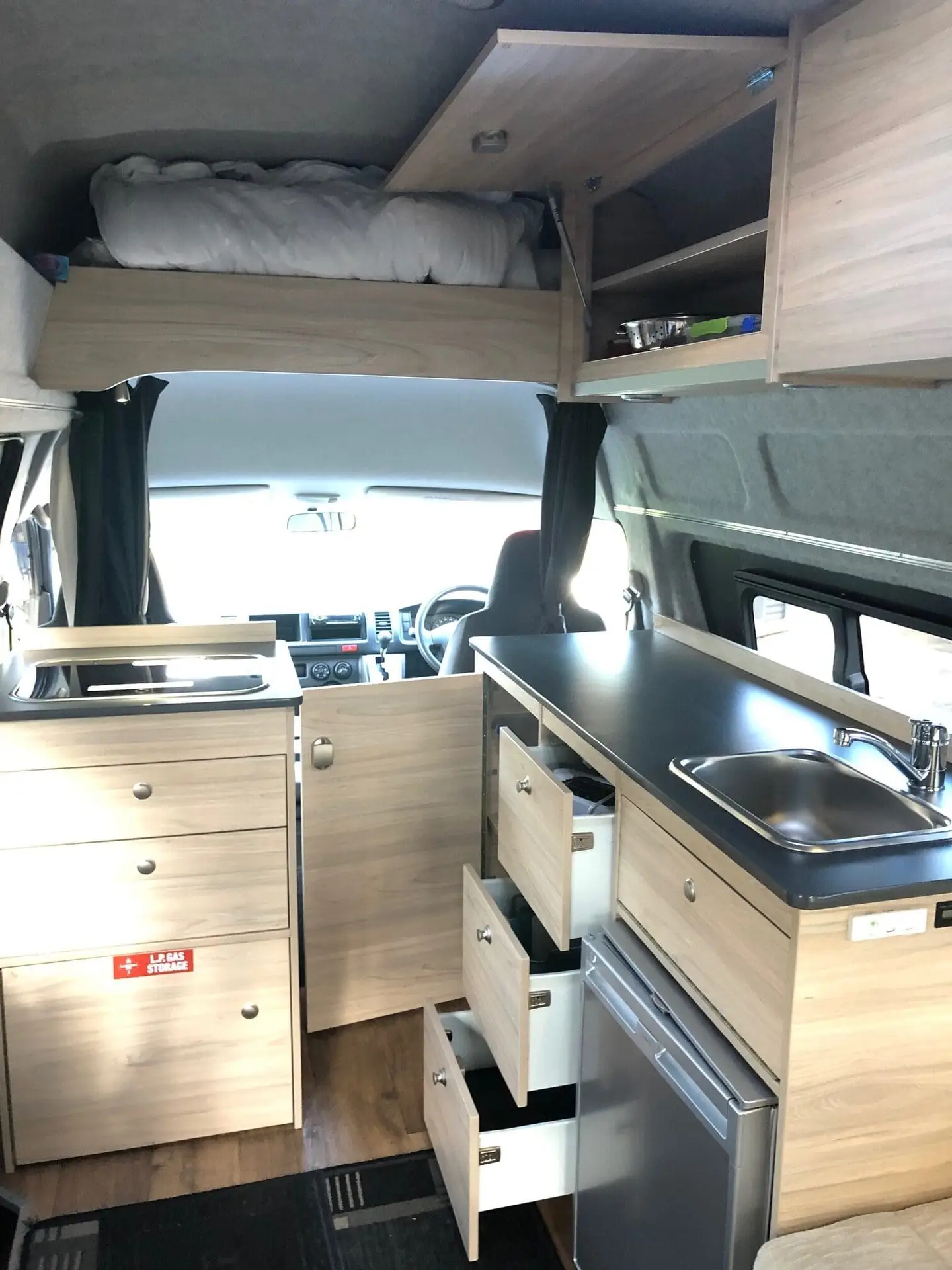
A walkthrough interior is one of those practical details that couples appreciate quickly. Being able to move between the cab and the living area without stepping outside is useful in bad weather, late arrivals, or early departures. It also makes the van feel more connected and usable.
Heating matters more than many visitors expect. Even outside winter, nights in parts of New Zealand can be cold, especially in inland or higher-elevation areas. A campervan with proper heating is not just about comfort. It changes how well you sleep, and good sleep changes everything.
A fridge, gas cooker, sink, and decent water setup are also central, not optional. Eating out every day adds up fast, and one of the best parts of campervan travel is being able to stop at a beautiful spot and make your own meal. For couples trying to keep costs sensible, a functional kitchen setup is one of the biggest value drivers on the trip.
Power systems deserve attention, too. Solar support, a dual battery system, interior lighting, and charging points make independent travel much easier. If you want the freedom to stay in scenic places and not rely on paid campgrounds every night, these are the details that support that style of travel.
Campervan for couples New Zealand: comfort vs cost
Budget matters, but it helps to look at value rather than just the headline price. A cheaper van can become expensive if it is outdated, poorly laid out, hard to drive, or lacks features that help you avoid extra accommodation and dining costs.
For couples, the best value usually comes from a vehicle that includes the practical essentials in the upfront price and is properly maintained. Cleanliness, mechanical reliability, and transparent pricing are not glamorous topics, but they are exactly what create a smoother trip.
It also pays to think honestly about how you travel as a pair. If one of you packs heavily, likes personal space, or needs comfort to enjoy the journey, going too small can be a mistake. If you are relaxed, outdoorsy, and mostly use the van as a comfortable base rather than a place to spend all day, a compact two-person setup can feel ideal.
Why drivability matters more in New Zealand
New Zealand rewards road trips, but it is not a place where bigger automatically feels better behind the wheel. Distances can look short on a map and still take time because of hills, curves, and changing road conditions. Add unfamiliar driving rules, weather, and busy holiday periods, and confidence in the vehicle becomes a lot more important.
This is one reason many couples prefer a smaller campervan over a bulky motorhome. It feels closer to driving a regular van, which lowers stress for people adjusting to left-side driving or sharing the driving duties. That ease can make the difference between a trip that feels relaxed and one that feels like a constant logistics exercise.
A well-designed compact campervan is also more practical in towns and cities. If you are flying in, collecting the van, stocking up, and heading off the same day, simpler is often better. The first 24 hours of a trip are when ease and clarity matter most.
What to look for from the rental company
The vehicle matters, but so does the operator behind it. Two vans with similar specs can deliver very different travel experiences depending on maintenance standards, handover quality, and support during the trip.
For couples visiting New Zealand, especially from overseas, personal service has real value. A detailed walkthrough, airport or station pickup support, and clear answers from someone who knows the country can remove a lot of uncertainty. That is especially helpful if this is your first campervan trip or your first time driving in New Zealand.
Look for signs that the company understands real travel conditions rather than just fleet turnover. Well-maintained vehicles, thoughtful layouts, straightforward pricing, and responsive support are often better indicators than glossy branding. Family-run operators with long local experience can be particularly strong here because they tend to focus on the trip itself rather than just the booking.
That is one reason travellers looking for a campervan for couples in New Zealand often prefer specialist companies such as BANZ Travelcars, where compact two-person travel is not an afterthought but the core of the service.
Is a self-contained campervan worth it for couples?
For many couples, yes – but it depends on how you plan to travel. If you want maximum flexibility, greater independence, and fewer fixed bookings, self-containment can be a real advantage. It supports the style of trip many people imagine when they picture New Zealand: changing plans, following the weather, and stopping where the scenery tells you to.
That said, self-containment is not a magic solution. You still need to understand local camping rules, where overnight parking is allowed, and what facilities are available. Finding legal and safe places to camp is easier if you use resources like campervan and camping apps, stop by local visitor centres for up-to-date guidance, or check the Department of Conservation (DOC) website for official campsites and rules. Some couples prefer a mix: freedom camping when it suits, and holiday parks when they want showers, laundry, or a reset. That approach often gives the best balance of cost and comfort.
The right choice feels easy, not oversized
The best campervan for a couple is rarely the one with the longest feature list. It is the one that supports the way you want to move through New Zealand – comfortably, confidently, and without turning every day into a compromise.
If you can drive it easily, sleep well in it, cook in it, and trust it to handle the road ahead, you are already close to the right choice. The rest of the trip has a way of taking care of itself when the van fits the journey.