Choosing the cheapest daily rate for a campervan in New Zealand can prove a costly mistake. A van that seems like a bargain online might end up costing more because of fuel, campsite fees, extra charges, or just being uncomfortable after a few rainy nights. For this reason, when people ask about the best value campervan hire, they usually want to know which van offers the most freedom, comfort, and reliability without paying for extra size or features they do not need.
For most independent travellers, the best choice is not the biggest vehicle available. A well-designed small campervan is usually easier to drive. It is also more affordable to run, and better suited for real travel in New Zealand.
What best value campervan hire options really look like
Value is not just about getting the lowest price. Real value means finding the right balance between cost, comfort, and what the van can do. If you are travelling alone or as a couple, a compact two-berth campervan often makes more sense than a big motorhome. You pay less for hire and fuel, and it is usually easier to park, reverse, and handle on narrow roads or in busy towns.
This is especially important in New Zealand, more than many first-time visitors realise. Many great spots are only accessible by winding roads, small-town streets, and scenic pull-offs where a big vehicle can feel out of place. Therefore, a compact van helps you feel more confident, especially if you are not used to driving on the left or handling a tall vehicle in changing weather.
The best value campervan hire is the one that fits your trip, not just what looks good in a brochure. If you are moving between beaches, mountain towns, and walking tracks most days, a practical two-person layout is often more useful than having extra seats, beds, or space you do not need.
Why smaller campervans often deliver better value
A smaller campervan encourages you to think honestly about how you travel. If there are only one or two of you, paying for a six-berth motorhome usually means paying for space you will not use. Bigger vehicles are great for families. On the other hand, for couples and solo travellers, the added costs often don’t bring much extra comfort.
Fuel is the most obvious extra cost. Larger vans are heavier and use more fuel, and over a few weeks, that adds up fast. Ferry costs, some holiday park fees, and even the stress of driving can also increase with a bigger vehicle.
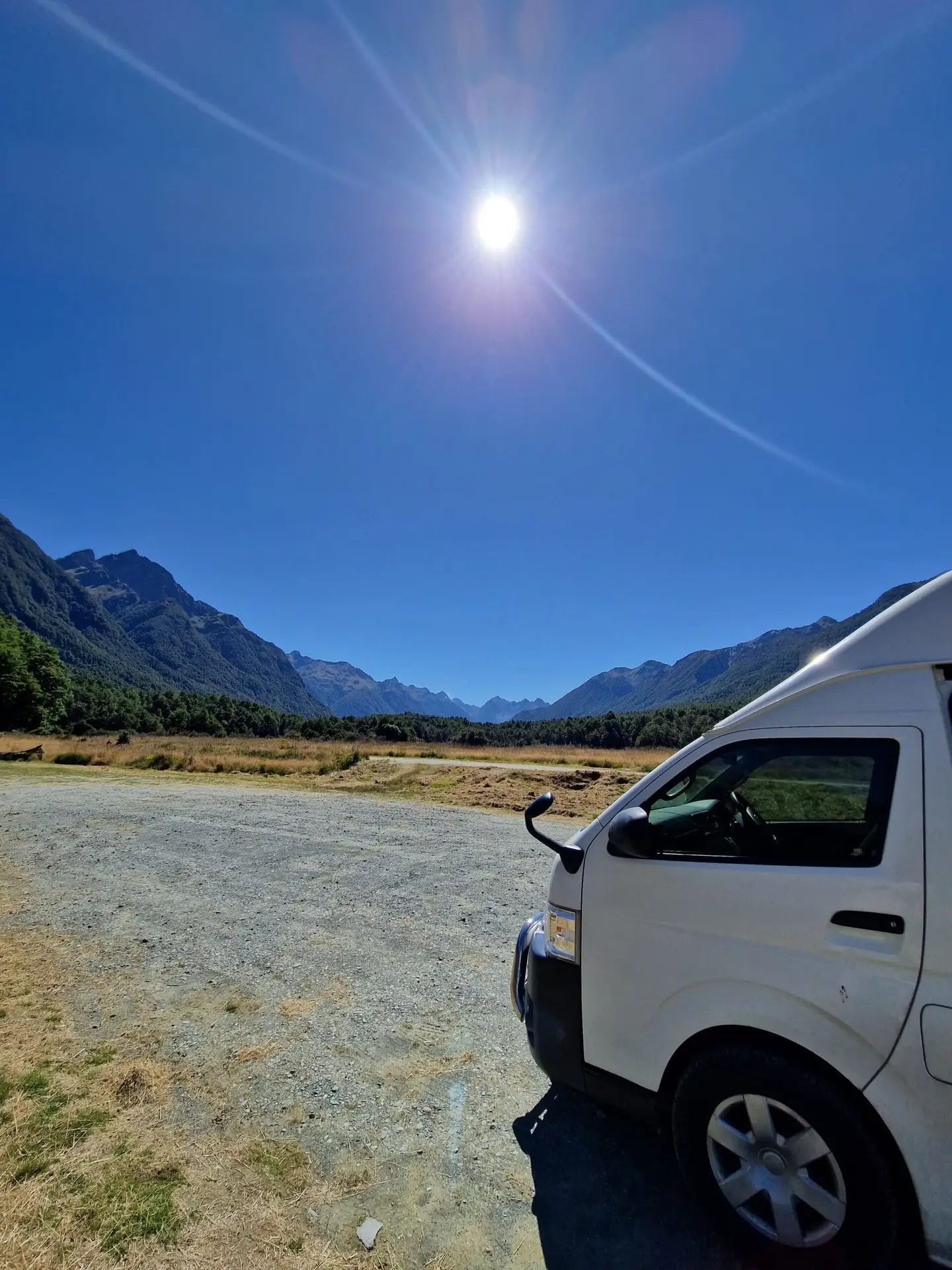
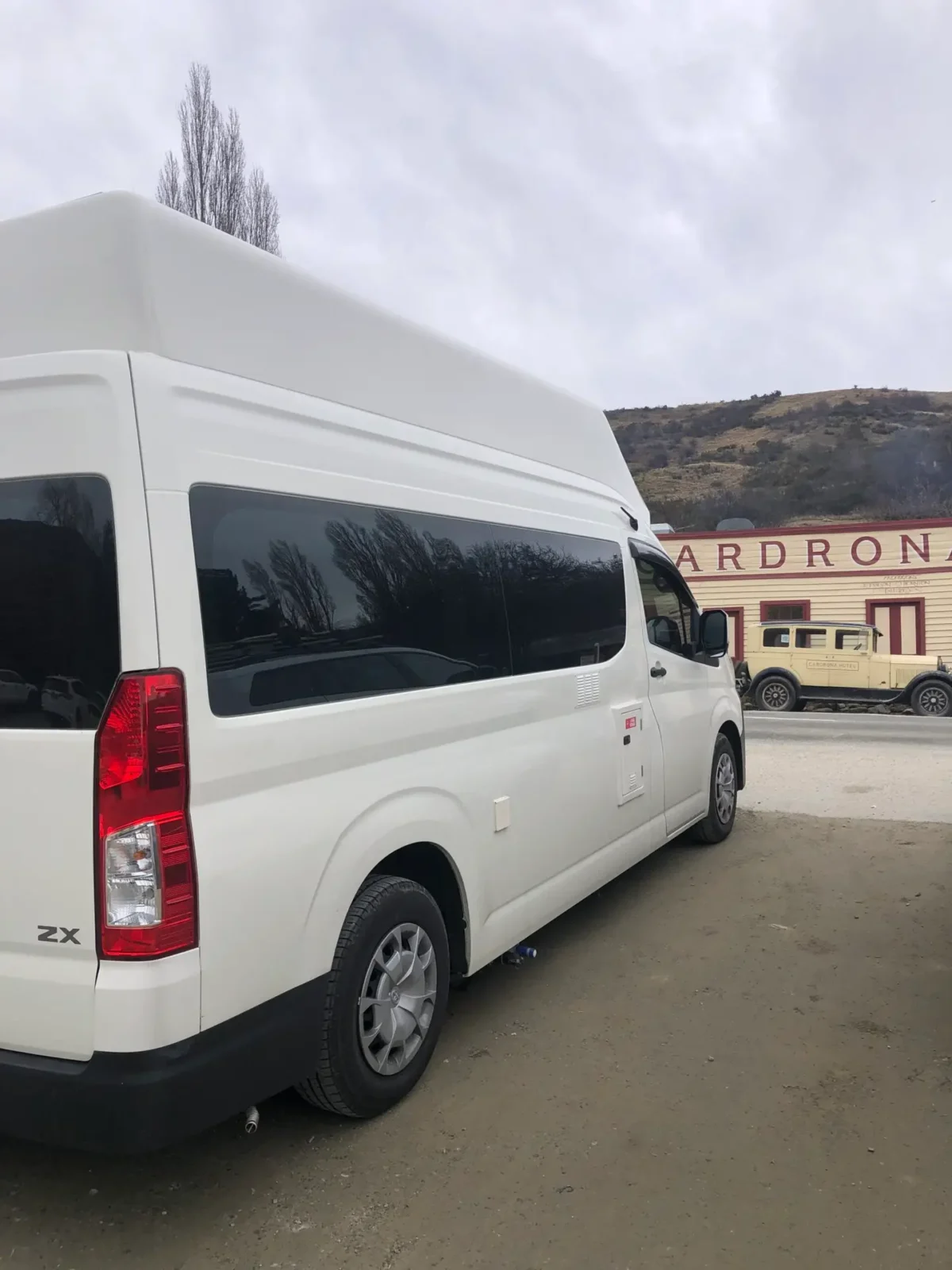
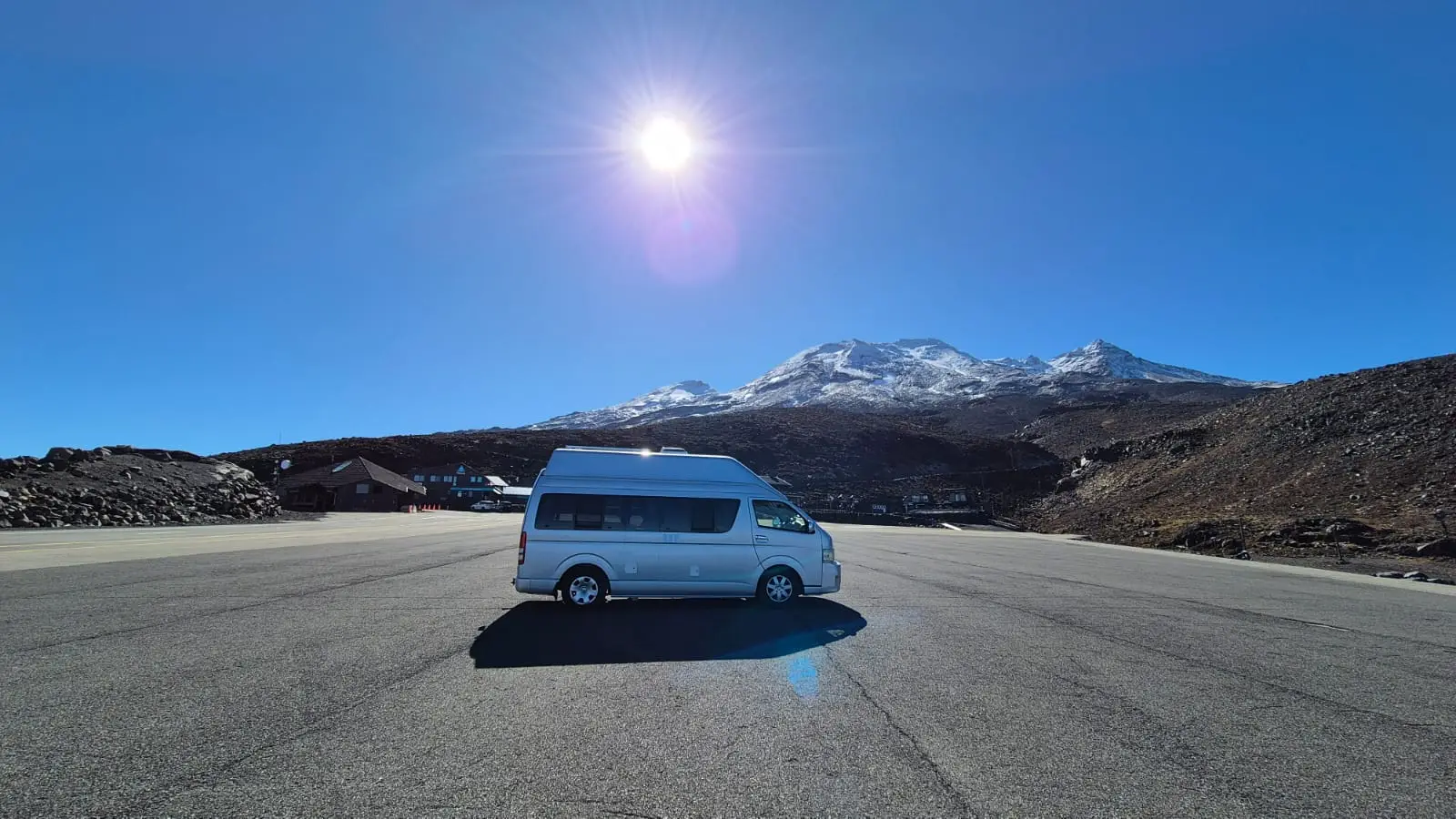
Drivability is another key factor. A campervan about the size of a Toyota Hiace is a good middle ground for many travellers. It is small enough for daily driving without feeling like a bus, yet still big enough to include the important features: a proper bed, storage, cooking space, ventilation, and room to move between the cab and living area. In particular, this walkthrough design is especially useful in bad weather.
In practice, a smaller van is often easier to use. You can stop more easily, pull into scenic spots without worrying, and you do not feel tied to formal campgrounds every night.
Features that make a campervan good value, not just cheap
When comparing hiring options, do not focus solely on the main price. A low rate does not mean much if the van is poorly equipped or if you have to pay extra for basic things.
A good value campervan should come with the basics you need for longer trips. This usually includes a fridge, cooking gear, a comfortable bed, enough storage, and reliable power. In New Zealand, it is also helpful to have heating for cold nights. A solar or dual-battery system adds more flexibility at powered sites.
Self-containment can also be important, depending on your travel style and local rules. Even if you do not plan to freedom camp every night, having a van set up for independent travel gives you more choices. Having options adds value.
Cleanliness and maintenance are just as important as the features listed. An older van can still be a great value if it is well looked after, thoughtfully converted, and properly prepared between hires. On the other hand, a newer van with poor maintenance can ruin your trip quickly. Reliability may not be exciting, but it saves you the most money in the long run.
The hidden costs that change the whole deal
This is where many travellers get tripped up. The base rate looks good, but the extra charges add up fast. Bedding, kitchen gear, extra drivers, airport transfers, insurance upgrades, and one-way fees can all increase the real cost.
It is also important to check if the van is truly ready for your trip. If you have to add portable gear, heating, camping accessories, or power upgrades just to make it work for a South Island trip in cooler months, that cheap hire rate is not really a bargain.
Transparent pricing shows that a company understands what travellers really need. Clear communication before you book is also important. If it is hard to get clear answers about what is included, support, bond terms, or the van’s condition, that is usually a red flag.
You often find the best value campervan hire with companies that focus on one style of travel and do it well. This is instead of trying to serve every type of customer with a huge fleet and lots of extras.
Best value campervan hire options for different travellers
If you are travelling alone, the best value is usually the smallest campervan that still lets you sleep comfortably and keep your gear organised. You do not need much space, but you do need a layout that works when it is raining and you are stuck inside longer than expected.
For couples, the best value usually comes from a two-person campervan with a proper bed, good ventilation, and enough power for several days on the road. Here, practical design is more important than fancy looks. You want a van that is comfortable to live in, not just one that looks good in pictures.
Long-term travelers often get the best value by choosing reliability and low running costs instead of extra luxury. If you are on the road for weeks, a simple, well-equipped campervan is often a smarter choice than a fancy motorhome that uses up your budget before the trip even starts.
If you are watching your budget, be careful not to go too cheaply. A cramped layout, a weak battery, or a bad mattress can quickly make your trip uncomfortable. Saving a little at first does not help if you end up paying for extra accommodation just to get a break from the van.
How to compare campervan hire options properly
Begin by thinking about how you will use the van each day. Will you move every day or stay in one place for a while? Are you travelling in summer, or will you need heating and better insulation? Do you want the option to stay off-grid sometimes, or will you mostly use holiday parks?
Once you know your needs, compare vehicles based on the total value for your trip, not just the daily rate. Consider fuel economy, included equipment, sleeping comfort, power setup, ease of driving, and the support available if something goes wrong.
Service is more important than many people think. A thorough handover, honest advice, and local support can make a big difference, especially if you are visiting from overseas. Family-run companies often do well because they know their vehicles and treat your trip as more than just a booking. For example, BANZ Travelcars is known for practical two-person campervans, clear pricing, and direct support for independent travellers.
When paying a little more is worth it
Sometimes the best value is not the cheapest option. If a van comes with solar, dual batteries, heating, airport pickup, and a better layout, paying a little more can actually save you money and make your trip better. You might spend less on campsites, avoid extra charges, and enjoy your trip more from the start.
This is especially important for longer rentals. Small comfort problems can turn into big issues after ten days. A van that is easy to cook, sleep, and live in makes the whole trip smoother. That is real value, even if it is not the cheapest option.
The same is true for confidence in your vehicle. New Zealand road trips often cover a lot of ground, from the coast to the mountains. When your campervan is well-maintained and set up, you can focus on enjoying the scenery instead of worrying about the fridge or the battery.
The best campervan is rarely the fanciest. It is the one that fits your trip, your budget, and your comfort level without adding extra cost or stress. If you remember that, it is much easier to find the best value campervan hire. Your road trip is more likely to feel relaxed from the very start.