When you first drive a campervan in New Zealand, the scenery can grab your attention even more than the vehicle itself. Snowy mountains, winding coasts, one-lane bridges, and narrow country roads all require you to stay focused. If you are wondering how to drive a campervan here, the good news is that it is usually easier than most people expect, especially if you choose a compact, well-designed van.
Most travelers find that the real challenge is not handling a large vehicle, but learning to read the road. New Zealand roads can change quickly. A route that looks short on a map might have winding hills, gravel stretches, sharp turns, or sudden changes in weather. Staying calm and steady is more important than just feeling confident.
How to drive a campervan in New Zealand with confidence
The best way to begin is to let go of any urge to hurry. Campervans are made for comfortable, independent travel, not for weaving through traffic or squeezing into tight spots. Once you accept this, driving becomes much more relaxed and enjoyable.
If you usually drive a regular car, a compact campervan will start to feel familiar after an hour or two. Vans like the Toyota Hiace are popular because they offer extra space for sleeping and storage without being as bulky as a large motorhome. This makes them easier to park, better for narrow roads, and less tiring on long drives.
Before you start your trip, take time to walk through the vehicle. Check the mirrors, learn how it turns, know its height, and practice reversing. It also helps to know where you keep things like charger cables, water, bedding, and cooking gear, especially if you plan to stop often, so nothing moves around while you drive.
Start with New Zealand road rules, not just vehicle size
Many visitors focus on the campervan, but the bigger change is getting used to the road system. In New Zealand, you drive on the left. If you are coming from Europe or North America, this takes extra attention at intersections, roundabouts, and when starting off after a stop.
Remember, speed limits show the maximum for ideal conditions. Many roads need slower speeds than the signs suggest. On winding roads, locals might drive faster than you feel comfortable. Let them pass safely. There is no need to hold up a line of cars on a scenic route.
One-lane bridges can surprise many travelers. Signs will tell you who has the right of way, so slow down early and read them carefully. The same advice applies to gravel roads. Some camping spots and scenic drives have unsealed surfaces. While campervans can usually handle these, you should slow down and avoid sudden braking.
Using a mobile phone while driving is restricted, and drink-driving laws are strict. It is easy to get casual on a road trip, especially when moving between beaches, walks, and wineries. Always treat each day of driving seriously.
Plan shorter days than you think you need
A common mistake is thinking you can travel farther than you actually can. Distances in New Zealand may look short on a map, but the roads are often slower than visitors expect. A three-hour drive can feel like a full day if the road is winding, traffic is heavy, or you stop often for sights, food, and walks.
It is better to plan for shorter driving days and give yourself extra time. Try to arrive before dark and allow for possible weather delays. This is especially important if you pick up your campervan after a flight. Even experienced drivers can feel tired after long travel, so avoid challenging roads or busy city traffic on your first day.
Hills, corners and weather change the way you drive
Patience pays off when driving in New Zealand. On hilly roads, use lower gears when needed and avoid keeping your foot on the brakes when going downhill. If you have a modern automatic campervan, it will handle much of this for you, but it is still important to drive smoothly and plan ahead.
Take corners more slowly than you think you need to, and only speed up once you can see the road ahead. This is especially important in wet weather. Rain can make roads slippery, and strong winds can affect taller vehicles, especially on open highways and along the coast.
In winter, weather in the South Island can change fast. Ice, snow, and early darkness make things more complicated. This does not mean you cannot travel by campervan, but you do need to plan your route more carefully. Check the conditions each morning and be ready to change your plans if needed.
Parking and reversing without the stress
When parking a campervan, it is best to choose the easiest spot. If a space looks too tight, move on—there is usually a better one close by. Reverse slowly, use your mirrors, and ask your travel partner to help guide you if possible. Using clear hand signals works better than shouting directions.
Town centers, supermarket parking lots, and popular lakefront areas can get crowded, so try to arrive early for easier parking. Watch out for clearance bars, curbs, and low branches. Even if the van does not feel big while driving, its height and rear overhang are important when parking.
If you feel nervous, practice on your first day in a quiet parking lot. Spend ten minutes reversing, turning, and judging distances. This can help you feel more confident for the rest of your trip.
Living in the van affects the way you drive it
A campervan is both your transport and your place to stay, so how you drive affects your comfort later. Loose items will move around if not secured. If the fridge is packed carelessly, things can spill. If bedding or bags block doors, every stop becomes harder than it should be.
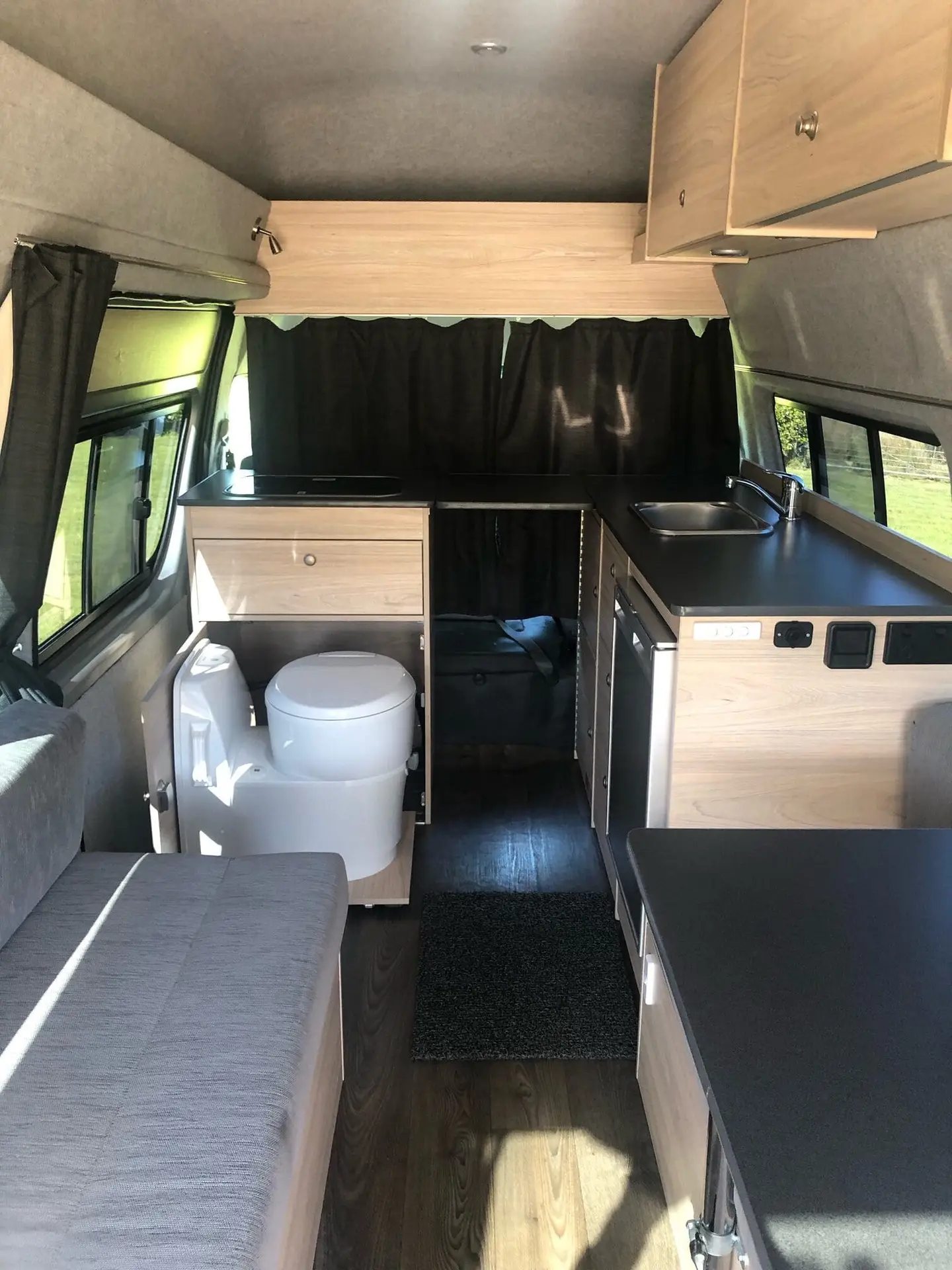
Make a simple routine before you start driving. Secure drawers, latch cupboards, check roof vents, unplug power, and make sure nothing can slide off the bench. This is one reason why smaller, practical campervans are great for independent travel: everything is close by, and setup is faster once you know the layout.
For couples or solo travelers, compact vans make things easier to learn. You still get important comforts like sleeping space, cooking facilities, storage, and often solar power, but without the size of a full motorhome. This helps on narrow roads, at petrol stations, and when arriving at campsites late in the day.
Petrol, rest stops and road-trip rhythm
Do not let your petrol tank get too low, especially in remote areas. Service stations can be far apart on some routes, and their hours may vary outside big towns. The same goes for planning food, water, and dump-station stops if your campervan is self-contained.
Fatigue is also important to consider. Scenic driving can be tiring because you are always adjusting to new road conditions. Take regular breaks, switch drivers if your rental allows, and do not try to cover too much ground each day. Some of the best trips happen when you leave time to stop for a swim, a view, or an unplanned overnight stay.
If you rent from a local company like BANZ Travelcars, use the briefing to ask practical questions. The best tips are often about how to travel well in New Zealand, not just about the van. Roads are slower, weather is important, and being flexible usually works better than sticking to a strict plan.
The real skill is driving to the conditions
People often expect a list of technical tips for driving a campervan in New Zealand. In truth, the main skill is much simpler. Drive on the left, slow down early, give yourself more time than you think you need, and do not let other drivers rush you.
Once you get used to this way of driving, the campervan feels less like a challenge and more like part of your adventure. You can stop where you like, stay as long as you want, and move on when you are ready. That freedom is worth protecting, and it starts with driving in a way that lets you enjoy the journey.