Quick tip: The right hitop campervan for your New Zealand road trip should be easy to drive and offer enough standing room. It should have a smart layout and include gear for everyday living. Check these basics before you book to avoid surprises on the road.
You usually notice the wrong campervan after the first rainy night or the first tight supermarket car park. Or you notice it the first time you try to make lunch with your bags piled on the bed. That is why knowing how to choose a hitop campervan hire properly matters before you book, not after you pick up the keys.
A hitop campervan sits in a sweet spot for many New Zealand road trips. It is compact enough to drive without drama, but tall enough to stand up inside and live in comfortably. For couples, solo travellers, and anyone planning more than a quick weekend away, that balance can make a real difference.
Why a hitop campervan suits New Zealand so well
New Zealand rewards flexibility. One day, you are winding through a small coastal town, and the next, you are parked beside a lake. Later, you are navigating a city street to restock groceries. A large motorhome can feel excessive for that kind of trip. Meanwhile, a basic car-and-tent setup can wear thin quickly once the weather turns.
A hitop campervan offers greater comfort without being cumbersome. The extra roof height means you can stand, change clothes, cook more easily, and move around without feeling cramped. At the same time, it is far more manageable than a full-size motorhome on narrower roads or in ferry queues. It is also easier to handle in everyday parking situations.
That said, not every hitop is set up the same way. Some are cleverly designed for proper touring. Others look fine in photos but feel cramped or under-equipped in practice. The right choice comes down to how you travel.
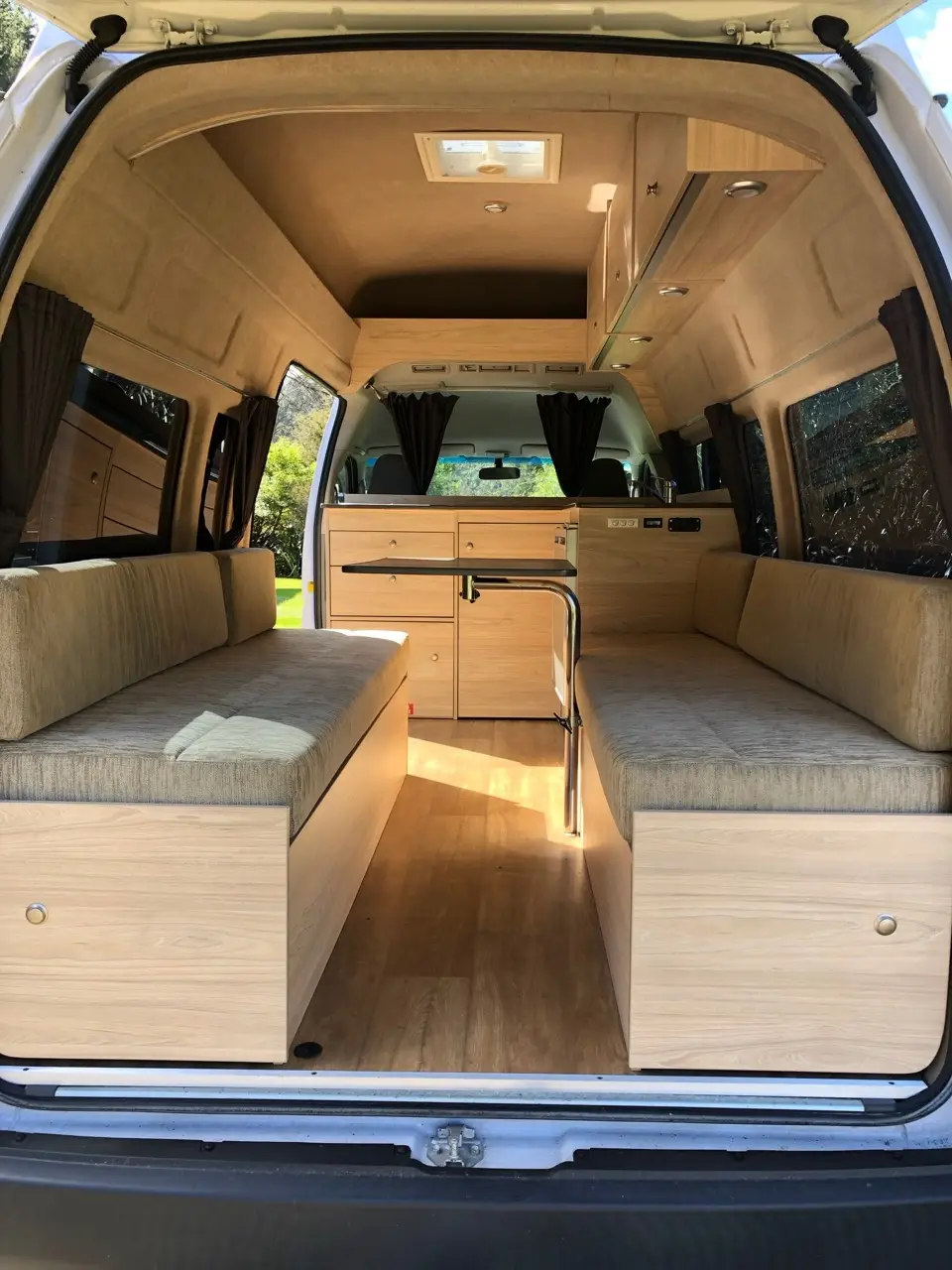
For example, one of the most common layouts features a rear lounge that converts into a double bed at night. There is also a compact kitchen along one side. This setup is great for couples who want a roomy, social space for relaxing or eating inside. However, it requires the bed to be converted daily. Another popular layout features a fixed bed in the back with storage beneath and a small dinette or workspace near the front. This suits people who prefer a ready-to-use sleeping area, making it easier after long days on the road. It also works for anyone who values a consistent place to rest. Families or those planning to work remotely might look for hitops with an additional forward-facing seat or table space, giving more flexibility for meals or laptop time. Considering these differences can help you pick a van that matches your routine. It is more important than just choosing the one that looks best in the brochure.
How to choose a hitop campervan for your trip style
Start with the most honest question: how much time will you actually spend inside the van? If you are travelling for two, three, or more weeks, the van is not just a means of transport. It is your kitchen, bedroom, lounge room, and wet-weather shelter. Small design differences become big quality-of-life issues.
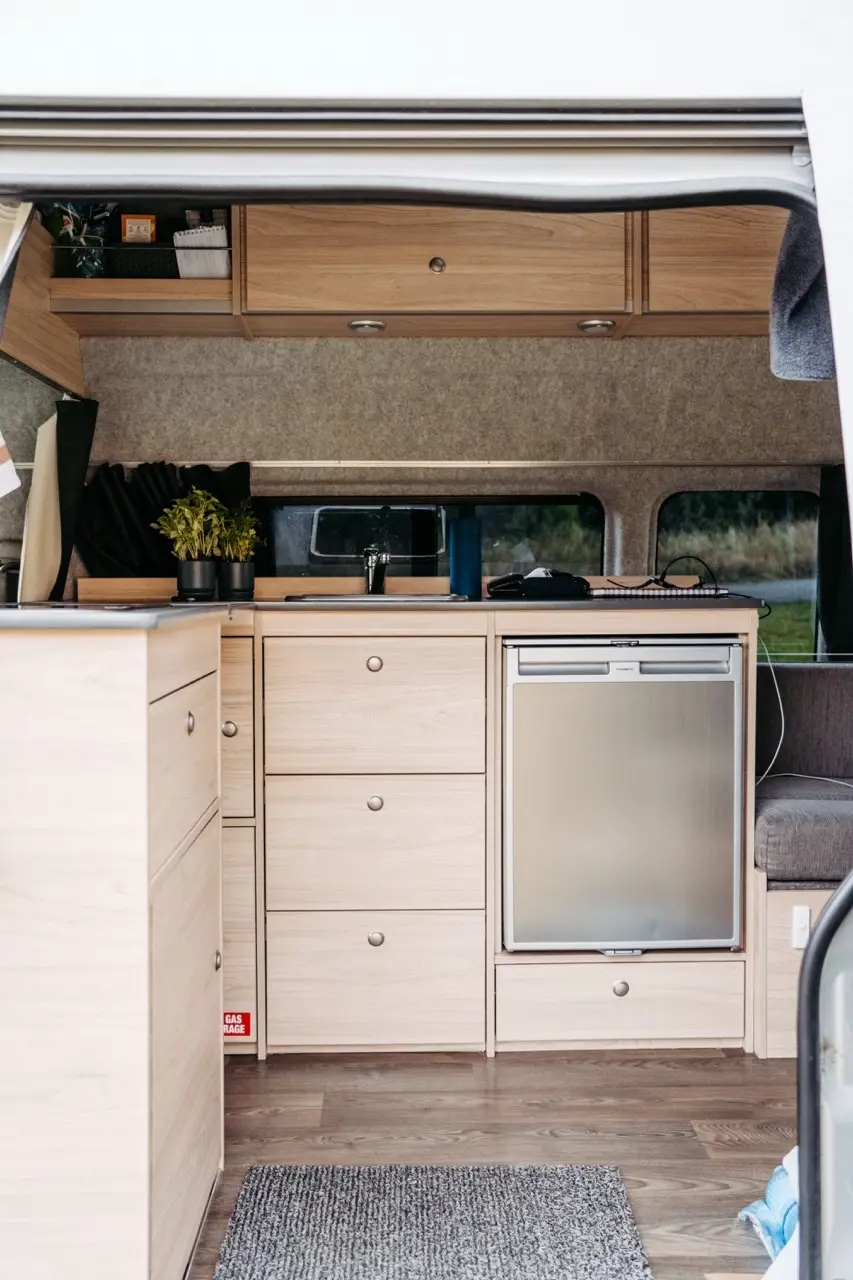
If you mainly want an affordable way to get around and sleep, almost any basic layout may do. But if you plan to freedom camp, cook regularly, work on the road, or travel in the shoulder season, you need a van equipped for daily living, not just overnight stops. Look for essentials like a fridge, stove or cooktop, heating, water storage, sink, reliable power supply (such as dual batteries or solar), and decent ventilation. These features make a big difference in comfort and practicality when you’re relying on the van for more than just a good night’s sleep.
Also think about your travel rhythm. Some people move every day and want a van that packs up quickly and is easy to manoeuvre. Others prefer slower travel with longer stays, where interior comfort matters more. Neither is wrong, but the right van for one can feel frustrating for the other.
The layout matters more than the brochure
When travellers compare campervans, they often focus on broad features first – bed, fridge, cooker, power. Those matters, but layout is what determines whether the van feels easy or annoying to use.
A good hitop layout should let you move from the cab to the living area without stepping outside. That walkthrough design is especially useful in bad weather, late at night, or when you want quick access to gear. It also makes the van feel more integrated and less like a converted people mover with furniture squeezed in.
Look closely at where luggage goes during the day and at night. If you have to keep shifting bags to make the bed usable, the van will feel smaller very quickly. The same goes for bench space. Even a simple meal becomes fiddly if there is nowhere to prepare it.
The bed setup deserves proper attention. Some travellers are happy converting the seating area each evening. Others would rather have a setup that is fast and straightforward. There is no perfect answer. However, the process should be simple enough that you will not dread doing it after a long drive.
Standing room is not a luxury
This is one of the biggest reasons people choose a hitop in the first place, and it is worth protecting. Interior height changes how a van feels every day. Being able to stand upright to cook, get dressed, or wait out a shower makes extended travel much more comfortable.
If you are tall, check the actual internal height rather than assuming all hitops are the same. A few centimetres can be the difference between relaxed and constantly stooped. For longer hires, that matters more than many first-time renters expect.
Check the essentials for self-contained travel
If your plan includes flexibility, you need more than a mattress and a steering wheel. New Zealand road trips often work best when your campervan can operate independently for a while. This is especially true if you want to stay in scenic areas rather than rely on commercial accommodation every night.
Power is a major one. A dual battery system and solar support can make a real difference if you are charging devices, running lights, or using the fridge regularly. Without decent off-grid capability, you may end up planning your trip around powered sites. Instead, you should plan around the places you actually want to visit.
Heating is another feature people underestimate until the temperature drops. Even outside winter, nights can be cold in many parts of New Zealand. A heated van is simply more comfortable, especially for travel in the South Island. It is also helpful for longer trips through spring and autumn.
Fridge size, water storage, cooking facilities, and ventilation all deserve a close look. None of these needs to be fancy, but they do need to be practical. A van that supports simple everyday routines well will feel far better value than one packed with flashy extras you barely use.
Safety and drivability should stay near the top of the list
Comfort matters, but confidence behind the wheel matters just as much. If you are not used to driving larger vehicles, a hitop campervan is often a sensible choice. This is because it remains familiar enough to adapt to quickly.
That said, driving ease varies between vehicles. A well-maintained van with good visibility, sensible dimensions, and a stable feel on the road reduces stress straight away. On New Zealand roads, where conditions can shift from motorway to winding rural stretches in the same day, that is worth prioritising.
Use a simple pre-trip checklist before you commit to any van:
The DRIVE Checklist
– D: Details on vehicle age and maintenance history
– R: Reversing visibility (can you see clearly when backing up?)
– I: Interior fit-out (purpose-built or improvised? Check for solid build quality)
– V: Vehicle safety basics (working seatbelts, tyres in good condition)
– E: Enquire about servicing (how often is it checked or maintained?)
A campervan can look tidy in photos but might still be less dependable than it should be. Taking a moment to work through this checklist can help you avoid headaches on the road.
This is also where smaller operators can have an advantage. When the people handing over the van know the vehicle well and explain it properly, it often leads to a smoother trip than a rushed pickup from a large fleet desk.
Value is not just the daily hire rate
One of the biggest mistakes travellers make is comparing campervans on headline price alone. A cheaper rate can become expensive if key features are missing. It can also become pricey if extras add up once you start booking.
When weighing value, look at what is actually included. Bedding, kitchen gear, heating, airport or station pickup support, insurance clarity, and roadside help all affect the real cost and the overall experience. Transparent pricing is worth more than a bargain that gets muddier the closer you get to departure.
It also pays to consider vehicle quality in relation to trip length. If you are hiring for several weeks, spending a little more for better comfort, cleaner design, and stronger off-grid capability often pays off. The van is central to the holiday, not a background detail.
How to choose hitop campervan hire with confidence
A good decision usually comes from asking a few practical questions rather than chasing the van with the longest list of features. Will it be easy to drive on New Zealand roads? Can you stand up inside comfortably? Is the layout workable every day? Does it support the way you want to travel, especially if you hope to stay independent and keep costs down?
Then look at the people behind the vehicle. Clear communication, straightforward answers, and a proper handover are not small extras. They tell you a lot about what your trip will feel like if something unexpected comes up on the road. To help you feel confident before you book, ask the rental company a few key questions: Who do I contact if I need help during the trip? What does the handover process involve, and will someone show me how the features work? Is roadside assistance included, and what are the response times? These questions not only reveal how much support you can expect, but also set a positive tone for your journey.
For many travellers, the best hitop campervan is not the biggest, newest, or most expensive. It is the one that gives you enough comfort to enjoy the journey, enough practicality to stay flexible, and enough reassurance to head off without second-guessing every detail. That is usually where real value sits.
If you choose with your actual travel habits in mind, your campervan stops being just transport and starts doing what it should – giving you the freedom to enjoy New Zealand at your own pace.