You pull up beside a lake, the light is fading, and it looks like the perfect place to stay the night. Then you spot a sign about camping restrictions. Suddenly the big question hits: can tourists freedom camp legally in New Zealand, or are you about to get fined for getting it wrong?
The short answer is yes: tourists can legally freedom camp in New Zealand. The longer answer is that it depends on where you park and what sort of vehicle you have. It also depends on whether that vehicle meets the local rules. This is where many visitors get caught out. For example, freedom camping is allowed in some places, prohibited in others, and tightly controlled in many of the most popular areas.
Can tourists freedom camp legally if they rent a campervan?
Yes, but legal freedom camping usually comes down to one key requirement – your vehicle needs to be properly set up for it. In most parts of New Zealand, that means using a certified self-contained campervan. This gives you access to the widest range of legal overnight options.
A self-contained campervan is designed to handle basic living needs without relying on public facilities. That includes fresh water, waste storage, and a toilet that remains usable when the bed is made up. Councils and enforcement officers care about this. This is because freedom camping rules are intended to protect local areas from litter, wastewater dumping, and overcrowding.
If you rent an ordinary car and plan to sleep in it, or you hire a van that is not certified for self-containment, your legal options become much narrower. Some places ban this entirely, while others allow it only in very limited designated areas. So while the idea of complete freedom sounds simple, the legal reality is more practical than romantic.
What freedom camping means in New Zealand
In New Zealand, freedom camping generally means staying overnight on public land that is not a formal holiday park or paid campground. That could be a council reserve, a roadside stopping area, or another public space where overnight camping is specifically permitted.
It does not mean you can sleep anywhere you like. National parks, town centres, beachfront car parks and scenic lookouts often have their own rules. Some are managed by local councils, and some by the Department of Conservation. Each can set different conditions. That is why travellers can be fully compliant one night and in breach the next if they assume the rules are the same everywhere.
The safest mindset is this: freedom camping in New Zealand is permission-based, not assumption-based. If a place does not clearly allow it, do not treat it as an open invitation.
The biggest legal trap for visitors
The most common mistake tourists make is assuming that a beautiful parking spot is a legal overnight stop. A second common mistake is relying on old advice from forums or social media. Freedom camping rules do change over time. Councils review local bylaws. Popular areas often become more restrictive after experiencing congestion or poor behaviour.
The other trap is believing that being in a campervan automatically makes overnight parking legal. It does not. Even a fully self-contained vehicle cannot freedom camp just anywhere. Certification helps, but it does not override local restrictions.
This is one reason many travellers prefer to hire from an experienced local operator rather than choosing only on price. Good advice at pickup can save you from expensive misunderstandings on the road.
Where tourists can freedom camp legally
Legal freedom camping spots usually fall into three categories.
The first is council-managed areas where overnight camping is allowed, often with limits on the number of vehicles or the number of nights you can stay. The second is Department of Conservation sites, which may range from basic free areas to low-cost campgrounds with toilets and water. The third is designated parking areas created specifically for certified self-contained vehicles.
These places often come with conditions. You might be allowed only one night. You may need to park within marked bays. Some spots ban tents and non-self-contained vans. Others have seasonal limits due to high summer demand.
A legal site is not always the most isolated or dramatic one. Quite often it is the clearly signposted, practical stop with a few other vans already there. That may not sound as glamorous as a secret beach lay-by, but it is far less likely to end with a knock on the door and a fine.
Can tourists freedom camp legally everywhere with a self-contained van?
No. This is worth repeating because it causes so much confusion. Even if your campervan is certified self-contained, you still need to follow local bylaws and signs.
Some districts welcome certified vehicles in selected public areas. Others restrict overnight parking heavily, especially near busy townships or tourism hotspots. In some places, the rule is effectively self-contained only in marked areas. In others, overnight stays are prohibited entirely outside commercial campgrounds.
So the better question is not simply whether tourists can legally freedom camp, but where they can legally freedom camp tonight. That small shift in thinking makes trip planning much easier.
How fines happen
Enforcement in New Zealand is real. Councils do issue infringement notices, and visitors are often surprised by how quickly this can happen in busy areas. Fines are commonly issued for camping in prohibited areas, staying in a non-compliant vehicle, overstaying time limits, or leaving waste behind.
You are more likely to be checked in popular destinations where pressure on local facilities is high. Waterfront areas, reserves near town and famous scenic routes are usually watched more closely than remote inland stops.
Most travellers are not fined because they are careless. They get fined for misunderstanding the rules, arriving late, or assuming a quiet car park is acceptable. A bit of planning before sunset usually prevents that.
How to stay on the right side of the rules
The practical approach is simple. Travel in a properly certified self-contained campervan. Check local signage at every stop, and confirm whether the area is actually designated for overnight stays. If a sign says no camping, no overnight parking, or self-contained vehicles only, take it literally.
It also helps to arrive while there is still daylight. Late-night decision-making leads to rushed choices, which in turn lead to awkward mornings. When you can clearly see the signs, ground conditions, and layout, it is much easier to determine whether a place is legitimate.
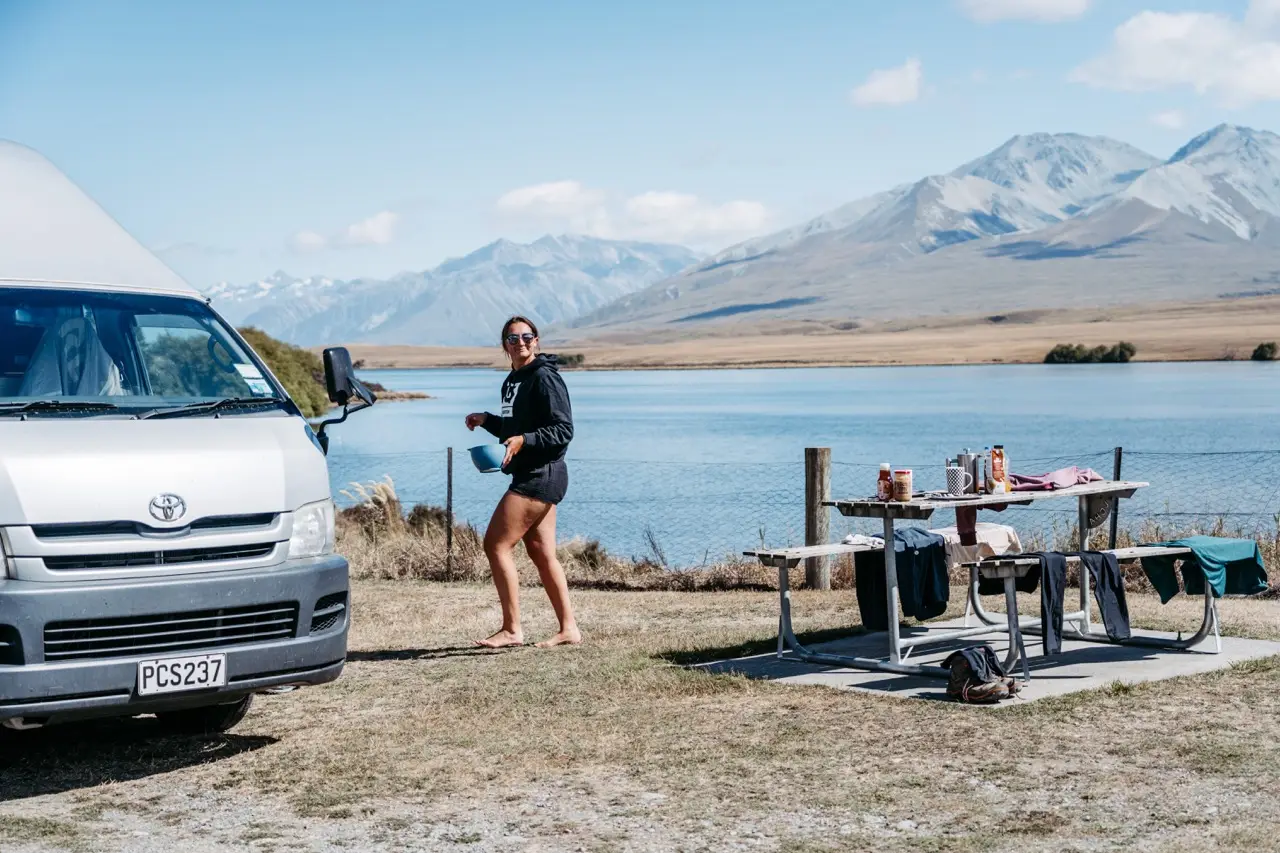
You should also keep your setup discreet and respectful. Put rubbish away, use your onboard facilities properly, and avoid spreading chairs and gear across public spaces where it is not appropriate. For example, legal freedom camping works best when travellers leave no trace and no reason for communities to tighten the rules further.
Why certified self-containment matters so much
For independent travellers, a self-contained campervan does more than tick a legal box. It gives you more flexibility when plans change or when the weather turns. It is also useful when a paid campground is full. It also means you are less dependent on public toilets and facilities. This is especially useful on longer drives or in smaller regional areas.
That is why small, well-equipped campervans are such a sensible option for New Zealand road trips. You still get the freedom to move around easily, and you park more comfortably than you would in a large motorhome. You can access more legal overnight options than you could in a basic car or sleeper van.
For many couples and solo travellers, that balance is the sweet spot. You are not paying for more vehicle than you need, but you are also not cutting corners that could limit where you can stay.
A realistic way to plan your trip
If freedom camping is part of your New Zealand itinerary, build your trip with a mix of overnight options. Use legal freedom camping sites when they suit your route, but do not expect to rely on them every single night. Some areas will be full, some will be restricted, and sometimes a proper campground is simply the easier choice.
That flexible approach makes the whole trip more relaxed. You get the independence people come for, without the stress of trying to force every stop into a free overnight stay. It is also a better way to travel responsibly in places that are under pressure during peak season.
Many experienced visitors find that the best road trips are not those built around the chase for free parking. They are the ones built around seeing more, driving comfortably, and knowing the van and the rules are working in your favour.
New Zealand absolutely rewards travellers who like to do things independently, but the best freedom on the road usually comes with a bit of structure. If you travel in the right vehicle, pay attention to local signs, and treat each stop with care, freedom camping can be both legal and one of the most memorable parts of the trip.