A six-week road trip from Auckland to Christchurch gives you something shorter itineraries rarely do: time. You can stop when the weather clears. You can stay an extra night by a lake. You can also take the slower road simply because it looks better. Along the way, you might discover hidden gems. These include Kawhia’s black sand hot water beach, the remote Rakiura Track on Stewart Island, and the quirky Steampunk HQ in Oamaru. Small towns such as Whangamomona are ideal for unscripted detours. So are the wild Purakaunui Falls in the Catlins and the tranquil coves around Marlborough. New Zealand looks compact on a map, but driving is not always quick. Mountains, winding coastlines, one-lane bridges and frequent photo stops all reward a relaxed plan.
For a couple or solo traveller in a compact campervan, six weeks is an excellent length of time. You can see both the North and South Islands without making every destination a one-night stop. You will still have room for the unscripted parts of the journey.
Planning a six-week road trip from Auckland to Christchurch
In spring, the sensible direction is southbound. Collect your campervan in Auckland. Spend roughly 17 to 19 nights on the North Island. Then allow 22 to 24 nights for the South Island before dropping off in Christchurch. The South Island has longer scenic driving days. It also has more places where staying two or three nights improves the experience.
Do not plan to drive every day. A good rhythm is two or three travel days followed by a slower day. Use it for walking, swimming, laundry, groceries or doing very little. In a small campervan, this pace feels comfortable rather than cramped.
Keep driving distances modest. Two to three hours is often plenty. This is especially true on arrival days or when heading into alpine country. A route may look short online. However, roadworks, weather and viewpoints can turn it into a full day.
Before you leave Auckland
Use your first day to settle into the vehicle. Buy a local SIM, stock the fridge and learn where everything lives. Ask for a proper walkthrough of the power, heating, water and cooking equipment. Make sure you also understand the bed setup. These details are easier to absorb before you are parked in the rain after a long day.
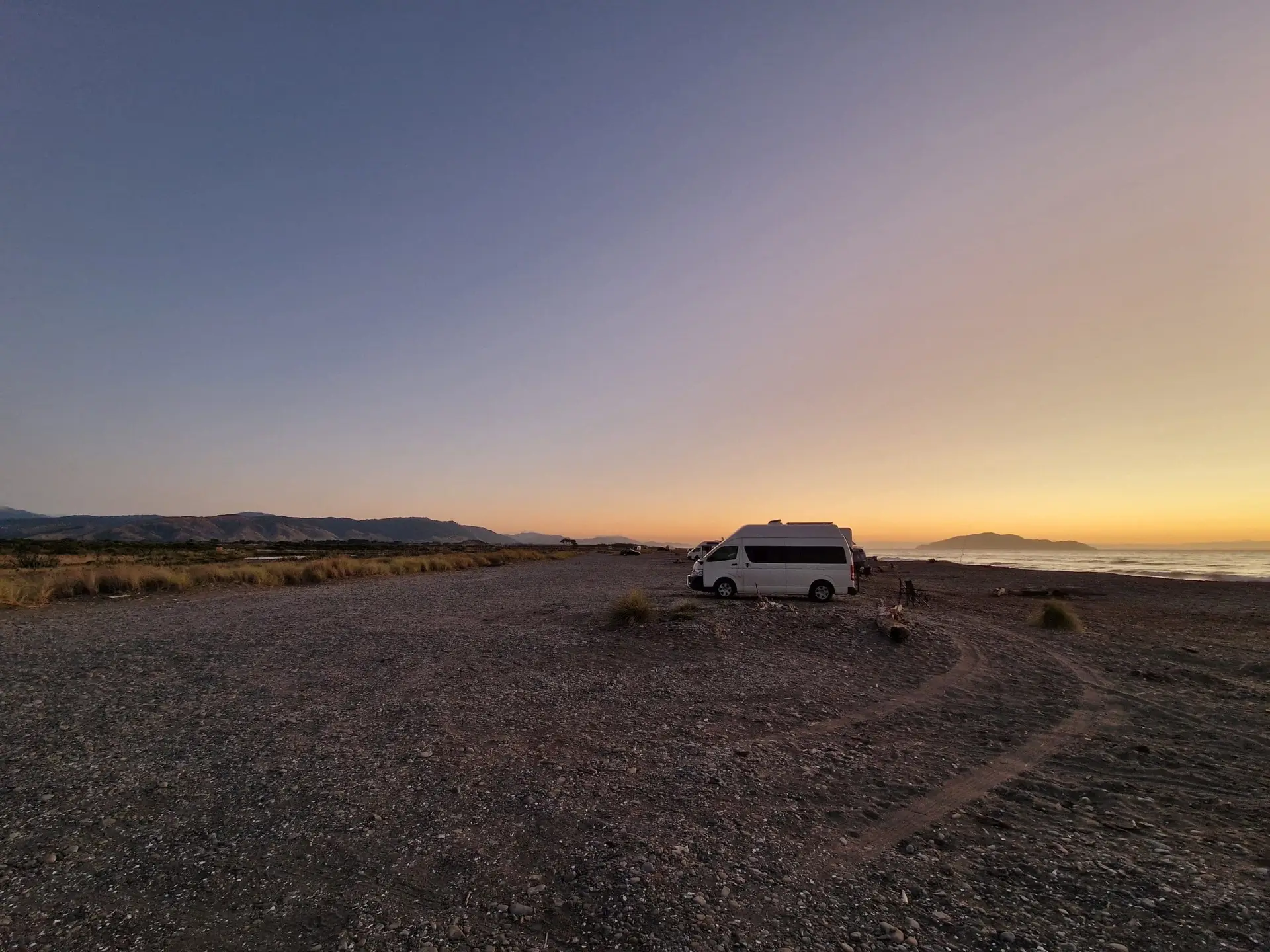
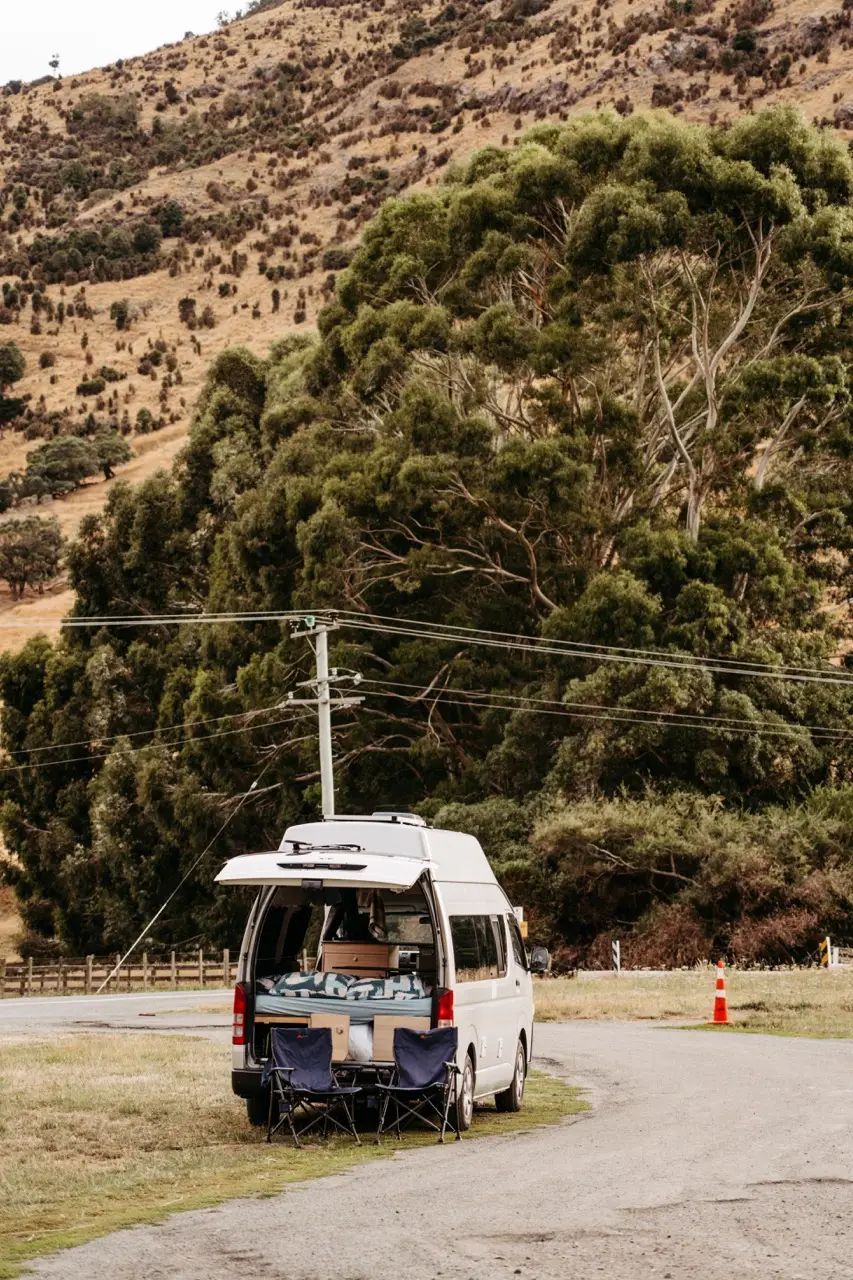
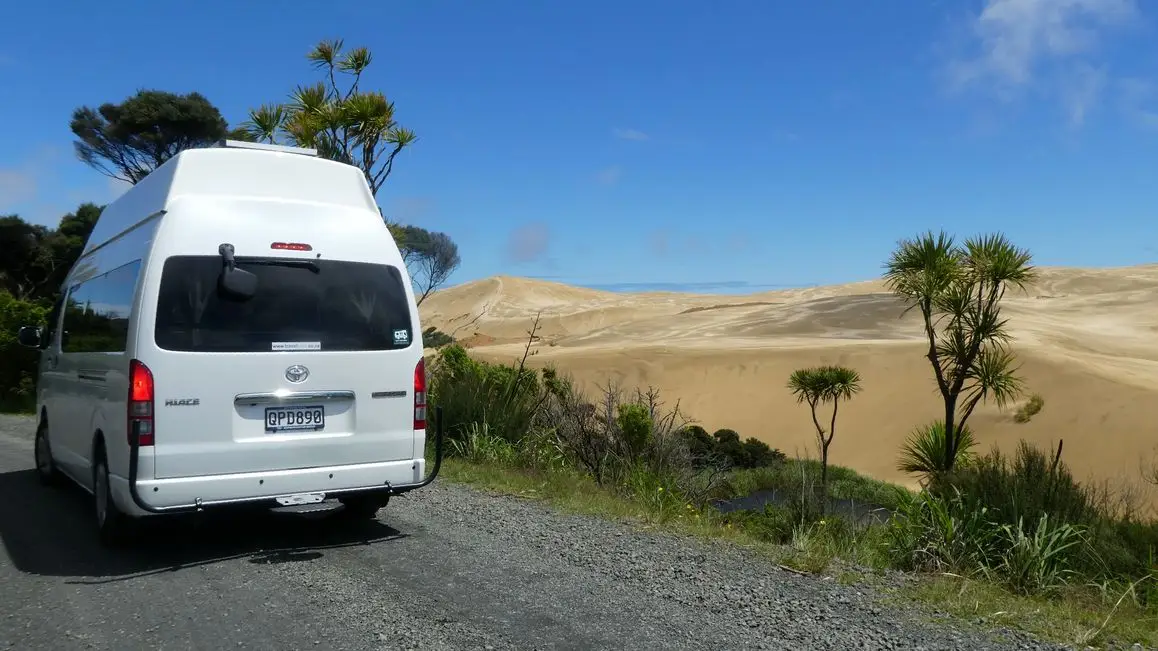
A well-equipped, easy-to-drive van is especially useful for a six-week trip. Compact Toyota Hiace-based campervans, like those prepared by BANZ Travelcars, feel less intimidating on narrow roads than large motorhomes. They still offer the practical comforts needed for an extended trip.
Weeks 1 and 2: Northland, Coromandel and the central North Island
Start by heading north from Auckland for four or five nights. Base yourself around the Bay of Islands or the wider Northland coast. Make time for Russell, Waitangi, a boat trip or a beach day. If you want to reach Cape Reinga, allow a full day for the return drive. The final stretch is slower than it appears.
Travel back south via the Kauri Coast if conditions allow. The massive kauri trees are extraordinary. Follow all hygiene requirements at forest entrances to help protect them from disease. Clean footwear matters.
From Auckland, make your way to the Coromandel Peninsula for three nights. Access to Cathedral Cove can vary with track conditions. Treat it as a bonus rather than building the whole route around it. Hot Water Beach and the coastal lookouts are also worth visiting. A slower overnight near Tairua or Whitianga adds to the appeal.
Next, travel through the Bay of Plenty to Rotorua and Taupō. Rotorua is ideal for geothermal parks, mountain biking and soaking in mineral water. Taupō offers lake views, Huka Falls and easy access to Tongariro country. Allow four or five nights between these areas. Avoid rushing through both.
If the Tongariro Alpine Crossing is on your list, stay flexible. It depends on the weather and requires suitable gear. It is not a casual stroll. Book transport where needed and check the forecast carefully. Have an alternative plan, such as short walks around Whakapapa or a quieter day in Taupō.
Week 3: Wellington, Marlborough and Abel Tasman
Work south through the volcanic plateau and Manawatū. You could stop at Whanganui or the Kapiti Coast before spending two nights in Wellington. The capital is compact and walkable. It offers a welcome change of pace after rural campsites. Park outside the busy centre where practical, then explore on foot.
Book your Cook Strait ferry early. This is especially important in summer and around school holidays. Ferry crossings can be affected by wind, so leave some breathing room around fixed bookings. The sailing through the Marlborough Sounds is part of the journey. It is more than transport between islands.
After arriving in Picton, give Marlborough two or three nights. Choose the vineyard country around Blenheim, the bays of the Marlborough Sounds, or a little of both. Then head west towards Nelson and Motueka. Both provide access to Abel Tasman National Park.
Abel Tasman works well as a two-night stop. A water taxi lets you walk part of the coastal track and visit golden beaches. You can then enjoy a relaxed return without committing to a multi-day hike. In peak season, book early. Carry food and water for the day.
Weeks 4 and 5: West Coast, Southern Alps and the lower South Island
Drive the Buller Gorge to the West Coast. Then travel south through Punakaiki, Hokitika and Franz Josef or Fox Glacier. This is one of New Zealand’s most dramatic campervan routes. It is also wet. Waterproof layers, dry bags and a flexible attitude are more useful here than a perfect forecast.
Give the glacier region at least two nights. Guided ice experiences can be cancelled because of the weather. The valley walks are still worthwhile in poor conditions. From there, continue through Haast Pass to Wānaka. The landscape quickly changes from rainforest to high country. Avoid tackling the route when you are tired.
Spend three nights around Wānaka and Queenstown. Wānaka is generally calmer and better suited to a slower lakeside stay. Queenstown offers more activities, nightlife and bigger crowds. Choose based on your ideal day. You might prefer an early walk and quiet swim, or jet boating and a busy restaurant scene.
From Queenstown, take your time through Central Otago. Arrowtown, Clyde and Alexandra show a different side of the South Island. Expect dry hills, historic gold-mining character and excellent cycling options. Then travel south to Te Anau for three nights. Use one full day for Milford Sound or Doubtful Sound.
Milford Sound is spectacular in all weather. Rain creates countless waterfalls. Clear days reveal the scale of the peaks. The road is long and has limited services, but there are plenty of stops. Fill the fuel tank, pack snacks and allow a full day. Do not rely on arriving late and easily finding a place to stay.
Week 6: The Catlins, Dunedin and the road to Christchurch
From Te Anau, head towards the Catlins for two or three nights. This quieter coastal area has waterfalls, wind-shaped beaches, sea lions and small settlements. Wildlife has the right of way. Keep your distance and never block an animal’s path. Be patient around nesting areas.
Continue to Dunedin and the Otago Peninsula. Allow time for both the city and the coastline. This is especially worthwhile if you enjoy heritage buildings, cafés and wildlife viewing. North of Dunedin, Moeraki Boulders make an easy stop. Then continue to Oamaru, known for its limestone architecture and penguin activity.
Use your final days for Aoraki/Mount Cook and Lake Tekapō. Weather can close in quickly around the mountains. Two nights are safer than one if the Hooker Valley Track or other walks matter to you. Tekapō’s dark skies are remarkable, but only when the clouds cooperate.
From there, Christchurch is an easy final drive. Aim to arrive the day before your drop-off. Avoid returning the campervan straight after a long mountain drive. This gives you time to refuel, remove your rubbish and pack calmly. You can also enjoy one final night without watching the clock.
Camping, costs and practical habits
Six weeks gives you the freedom to mix holiday parks with approved self-contained camping. Use holiday parks regularly for showers, laundry and charging devices. They also provide a proper reset. Freedom camping can be a wonderful part of the experience. However, only stay where it is permitted and follow all local signs. Rules vary by district. Ignoring them can lead to fines and damage the welcome travellers receive.
Budget for fuel, ferry travel, campsites, activities and supermarket shops. Include these costs alongside the campervan hire. Cooking most meals helps keep costs manageable. Still, leave room for a few local meals out. Farmers’ markets, roadside honesty stalls and small-town bakeries are part of the fun. Seek out cultural experiences along the way. Attend local festivals or community gatherings if your timing allows. Visit marae with permission to learn about Māori traditions. You could also join workshops featuring crafts, music or regional food. Even casual stops can create a warm connection. Chat with locals at rural pubs or take part in small-town events. These experiences can deepen your understanding of New Zealand’s diverse communities.
Download offline maps before driving into remote areas. Check road conditions each morning in winter and during heavy rain. Pay particular attention to mountain passes. Keep the fuel level above half when travelling through the West Coast, Fiordland or inland Otago. Service stations are less frequent in these areas.
Your best days may not be the famous ones. They might be a quiet evening beside a lake. They could be an unexpected walk suggested by another traveller. Or perhaps it will be the morning you decide not to drive anywhere. Give this route enough space, and New Zealand has a way of filling it.